Table of Contents
Scooter style e-bike charger matching should answer a practical buying question: how can a buyer prevent charger mismatch across a vehicle order? This guide applies that question to ZX01 scooter-style e-bike. It connects the published configuration with everyday carrying in an integrated center-storage layout, so a distributor, importer or fleet buyer can ask for the evidence needed before approving a sample or repeat order.
Scooter style e-bike: Specify the charger as part of the vehicle
Treat the charger as a controlled component of scooter style e-bike, with its own model reference and revision. The purchase specification should identify the battery chemistry, nominal pack voltage, required charge profile and the approved charger output. A physically compatible plug is not sufficient evidence of an electrically compatible system. Two connectors can look alike while their polarity, communication pins or intended voltage differ. Ask the supplier to identify the approved combination in writing and keep the charger label visible in the scooter style e-bike approval photographs.
If a project uses more than one battery option, create a separate row for every vehicle, pack and charger combination. Include the destination mains input and plug arrangement. Do not allow a warehouse to substitute an available charger because its connector fits. For scooter style e-bike, a substitution should go through the same compatibility review as a battery change, with updated instructions and packaging labels where necessary.
Evaluate the charging location and turnaround
Charging plans must fit the premises as well as the scooter style e-bike. Record where the charger sits, how cables are routed, who supervises the process and how damaged equipment is removed from service. Follow the manufacturer’s instructions for the approved charging environment. Keep charging equipment away from obstructed exits and avoid improvising extension arrangements or adapters during a demonstration. A convenient charging routine is one operators can follow consistently without working around storage, access or cable problems.
For a fleet of scooter style e-bike, draw the daily arrival and departure pattern. A charger shared by several vehicles can create a queue even when its individual charging time appears acceptable. Ask for the stated charging-time conditions, then observe a normal turnaround using the approved equipment. Do not infer a full charge time by dividing battery amp-hours by charger current alone. The charging process can change near completion, and the supplier’s instructions govern the approved use.
Make mistakes difficult at the depot
Assign each charger a readable identifier and a storage location linked to the corresponding vehicle or approved battery family. Train staff to check that identity before connecting equipment. Keep a quarantine label for equipment with damaged insulation, loose connectors, unusual heat or other abnormal behavior, and follow the supplier’s response instructions. The purpose is to stop an uncertain charger returning to the shared shelf, not to ask unqualified staff to open it.
At receiving inspection, reconcile the charger count against the scooter style e-bike order and record label photographs. For scooter style e-bike, include the approved pairing in the handover sheet and spare-parts catalog. If a replacement is needed later, request it by the controlled part number and vehicle configuration. A small amount of identification work at purchase prevents a larger compatibility problem when the fleet contains similar-looking chargers from several shipments.

ZX01 scooter style e-bike: published configuration
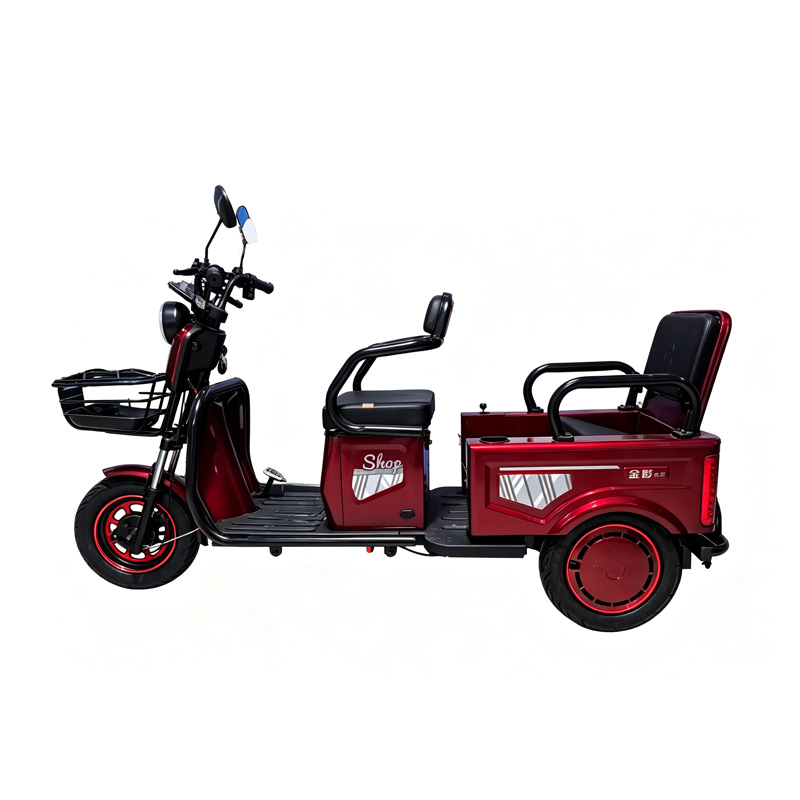
For scooter style e-bike, use a configuration-specific starting point. The ZX01 page lists an 800 W Lingming motor, a 9-tube Xiechang controller, 60 V/72 V electrical-system compatibility, 3.00-12 tubeless tires, front and rear disc brakes, hydraulic suspension and an integrated center storage box. The page’s system-voltage options do not identify a single battery amp-hour rating. Nominal pack energy therefore remains an open configuration item until the selected battery is confirmed.
Compare these published details with the selected sample on the ZX01 scooter-style e-bike product page. Compatibility with two system voltages does not authorize an operator to interchange batteries or chargers without an approved configuration.
Battery Sizing for scooter style e-bike: work backward from the service day
Battery sizing for scooter style e-bike starts with the work the vehicle must finish between approved charging opportunities. List each route leg, the expected load, the number of stops and the longest period away from the depot. Separate an ordinary day from a demanding day. A vehicle selected only for the average journey can become inconvenient when an extra collection, a detour or a missed charging window uses the reserve. Ask the operator which failure matters most: returning early, missing a delivery, or needing a second vehicle. That answer establishes the useful energy target before a battery option is chosen.
Keep route distance and energy consumption in separate columns. A kilometer on a flat uninterrupted route does not represent the same work as a kilometer of repeated loaded starts. For scooter style e-bike, record whether the rider contributes pedal effort or relies primarily on the motor. Add wind, surface condition and accessory use to the log. These are test conditions, not excuses to attach an unverified multiplier to a brochure figure.
Wet Weather Storage for scooter style e-bike: plan cleaning and post-exposure inspection
Use the approved cleaning procedure and products. Avoid directing water into electrical areas or making unapproved changes to seals and covers. Define who checks the vehicle after unusual exposure and what symptoms require it to be held from service. Staff should have a clear reporting route instead of experimenting with drying, opening or reconnecting uncertain electrical equipment.
For scooter style e-bike, include accessories in the cleaning review. A cargo box can trap water, a cover can interfere with ventilation, and an aftermarket attachment can redirect runoff toward a connector. Ask whether the proposed accessory arrangement remains within the intended use. Keep the review focused on the actual configuration rather than assuming a component-level rating answers every exposure question.
Spare Parts Plan for scooter style e-bike: maintain traceability across reorders
A reorder should confirm whether the original part remains current and whether any replacement supersedes it. Record the supersession and the compatible configurations. If a new part changes system behavior or requires another component, obtain an approved installation procedure and update the service records. Do not let an unrecorded substitute become the new fleet standard through repeated informal replacements.
The spare-parts plan for scooter style e-bike should include a replenishment trigger, a responsible person and a way to record use. Review stock after the pilot and after any configuration revision. Keep removed parts labeled when they are needed for supplier analysis. A reliable parts process supports consistent service because the team knows what fits, why it was replaced and how to obtain the same approved component again.

Apply charger matching to the ZX01 scooter style e-bike
Apply the charger matching review to this operating sequence: a user carries ordinary items in the center box and makes repeated short stops. For scooter style e-bike, record pack identity, charger output, connector polarity and charging instructions before the trial. Keep the selected battery, charger, accessories and loading arrangement fixed in the record so an observation can be traced to the configuration that produced it. If an option changes during the trial, mark the change and repeat the checks that it affects.
The physical review should pay particular attention to storage-box opening, foot space, steering movement and stand access. The service review should cover controller revision, approved voltage configuration and body-panel removal for service. These are separate questions: enough space to operate does not establish enough access to maintain the vehicle. Ask the evaluator to identify the difficult step, record its conditions and explain what evidence would close the concern. Avoid approving an entire application from one favorable observation.
For this scooter style e-bike application, the decision record should contain a matched battery and charger register. A reason to hold approval is a universal-compatibility promise based only on the plug shape. State the unresolved item, the party responsible for answering it and the verification required. The center box is a carrying feature. Its volume should not be converted into a payload rating without the supplier’s approved limit.
Compare scooter style e-bike evidence before acceptance
| Decision point | Evidence to request | Hold the decision when |
|---|---|---|
| Application boundary | everyday carrying in an integrated center-storage layout | The quoted configuration does not match the intended job |
| Charger Matching | a matched battery and charger register | a universal-compatibility promise based only on the plug shape |
| Physical fit | storage-box opening, foot space, steering movement and stand access | The route or accessory envelope has not been checked |
| Service support | controller revision, approved voltage configuration and body-panel removal for service | The installed version or replacement reference is unclear |
| Release record | Approved specification, findings and a named release decision | A substitution or unresolved finding remains undocumented |
Use the table to compare complete scooter style e-bike proposals on the same basis. Mark each item confirmed, open or requiring another check. Keep commercial assumptions separate from technical evidence. A lower quotation can be evaluated fairly only when the battery, charger, accessories, packing and support scope are understood. Ask for written clarification of an omitted field rather than assigning it a favorable default.
Prepare the scooter style e-bike sample request and release record
The ZX01’s integrated center box changes the carrying layout compared with a separate rear delivery rack. Review the opening, closure, usable dimensions and access while the vehicle is parked in its ordinary position. Ask the supplier for the permitted load and any restriction on what may be stored there. Keep items from interfering with controls or service access according to the instructions. The existence of a center box does not establish waterproof storage or a suitable enclosure for every type of cargo.
The published 60 V/72 V compatibility requires an explicit selection in the quotation. The page does not supply one amp-hour value from which every buyer can calculate a standard battery-energy figure. For scooter style e-bike, request the pack, controller and charger identifiers for the chosen system, together with the relevant labels and instructions. Keep that choice visible in parts and service records. Do not allow a later replacement pack to be selected only because its nominal voltage appears in the product-page compatibility range.
The charger matching request for ZX01 should specify pack identity, charger output, connector polarity and charging instructions. Ask for a matched battery and charger register, identify the test or review conditions and keep the accepted configuration with the order. Hold the purchasing decision if the proposal relies on a universal-compatibility promise based only on the plug shape. Record the responsible evaluator and the evidence needed to close that specific gap.
Request a configuration-specific scooter style e-bike proposal
For general terminology, consult the relevant Wikipedia reference. It provides background and does not certify this product or establish permission to operate it in a particular market.
Send your scooter style e-bike application, required quantity, destination, proposed load or seating arrangement and charger matching questions to Hongtu Future. Use the OEM and ODM customization service to discuss the approved configuration, branding, sample evaluation and support scope before placing an order.
Frequently Asked Questions About scooter style e-bike
What should buyers confirm first about scooter style e-bike charger matching?
Start with pack identity, charger output, connector polarity and charging instructions. For ZX01, match those inputs to the published configuration and the intended operating sequence. Keep any missing item open until the supplier or qualified evaluator confirms it.
Which ZX01 facts are relevant to this scooter style e-bike review?
The ZX01 page lists an 800 W Lingming motor, a 9-tube Xiechang controller, 60 V/72 V electrical-system compatibility, 3.00-12 tubeless tires, front and rear disc brakes, hydraulic suspension and an integrated center storage box. Confirm the ordered option and the actual sample before using those details in a purchasing decision.
What evidence should support a scooter style e-bike sample approval?
Request a matched battery and charger register. The record should identify the configuration, conditions, observations and acceptance decision. A product photograph or a favorable short demonstration does not answer every operating question.
Can a scooter style e-bike component be substituted after approval?
Ask for the proposed part reference, affected interfaces and compatibility evidence. For ZX01, review the checks and documents affected by the change and record approval before production. Similar headline specifications do not prove equivalence.
What should be included in a scooter style e-bike quotation request?
Name ZX01, the charger matching decision, destination, quantity, selected battery, charger, accessories and support needs. Ask for written exclusions and a configuration-specific proposal rather than assuming a standard commercial term.