Table des matières
La Chine possède une chaîne d'approvisionnement mature en mobilité électrique, mais les fournisseurs peuvent différer considérablement en termes de capacité de fabrication, de support technique, de contrôle de qualité, de personnalisation et d'expérience à l'exportation. Pour les distributeurs, les grossistes, les détaillants, les opérateurs de flottes et les marques de marque privée, l'objectif devrait donc être de trouver un fournisseur capable de soutenir la croissance des entreprises à long terme plutôt que de simplement proposer le devis le plus bas.
Principaux points à retenir
- Choisir un Vélo électrique chinois fournisseur basé sur la capacité de fabrication, pas le prix seul.
- Vérifiez si vous avez affaire à une usine, une société commerciale ou un fabricant intégré.
- Examinez attentivement les spécifications de la batterie, du moteur, du contrôleur, du cadre, du frein et du système électrique.
- Demandez des échantillons avant de confirmer une commande de gros volumes.
- Vérifiez les certifications selon votre marché de destination.
- Évaluer les procédures de contrôle qualité avant la production de masse.
- Confirmez les pièces de rechange, la garantie, le support technique et les procédures après-vente.
- La capacité OEM et ODM est importante pour les marques qui veulent des produits différenciés.
- Comparez le coût total de l’approvisionnement plutôt que le seul prix unitaire.
- Un fournisseur bénéficiant d’un soutien au développement, à la fabrication, aux tests et à l’exportation de produits peut réduire les risques d’approvisionnement à long terme.
Pourquoi se procurer un vélo électrique chinois ?
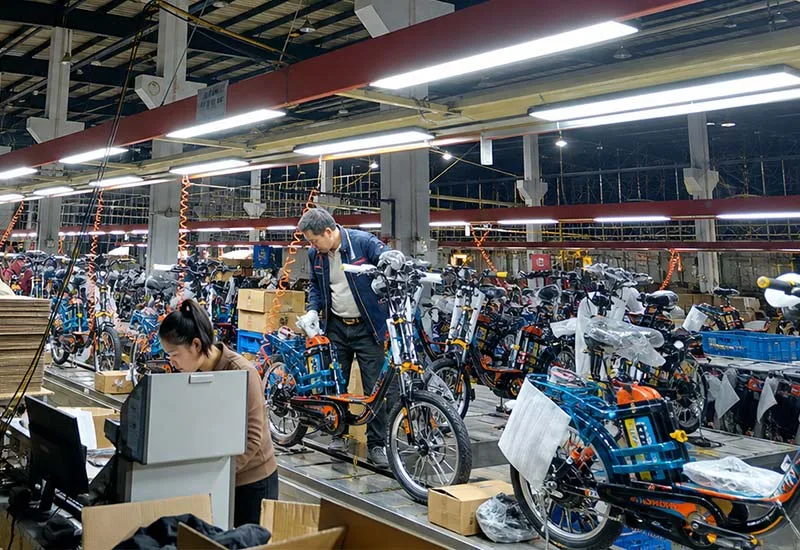
La Chine a développé une vaste chaîne d'approvisionnement autour de la mobilité électrique, couvrant les cadres, les moteurs, les batteries au lithium, les contrôleurs, les écrans, les systèmes de freinage, l'éclairage, la suspension, les pneus, l'emballage et l'assemblage complet du véhicule.
Pour les acheteurs étrangers, cela crée un accès à une grande variété de configurations de produits et d'options de personnalisation.
Produit Variété
Un professionnel Vélo électrique chinois le fabricant peut généralement fournir des modèles pour plusieurs segments de marché plutôt que de s'appuyer sur une seule plate-forme.
Par exemple, Hongtu Future organise actuellement ses produits de mobilité électrique en catégories comprenant Vélo électrique rétro, Vélo électrique Lifestyle, Véhicule de fret électrique, ´, et les produits tricycle electriques. y peut etre utile pour les distributeurs qui veulent construire un portefeuille complet de produits.
Configuration flexible
Différents marchés ont besoin de spécifications différentes.
La puissance du moteur, la capacité de la batterie, la taille des roues, le système de freinage, la suspension, l'éclairage, la vitesse de pointe, la portée, l'affichage et les accessoires peuvent tous devoir changer en fonction des réglementations locales et des préférences du client.
Pourquoi la flexibilité est importante
Une configuration qui fonctionne bien dans un pays peut ne pas être appropriée dans un autre.
Un fournisseur fiable devrait donc aider les acheteurs à définir le produit autour du marché cible plutôt que de simplement vendre un modèle existant sans modification.
Usine chinoise de vélos électriques contre société commerciale
L'une des premières questions que les acheteurs doivent se poser est de savoir si le fournisseur fabrique réellement le produit.
Les usines et les sociétés commerciales peuvent être utiles, mais elles offrent des avantages différents.
| Facteur | Fabricant Direct | Société commerciale |
|---|---|---|
| Personnalisation du produit | Généralement plus fort | Dépend du partenaire d'usine |
| Communication d'ingénierie | Plus direct | Souvent indirectes |
| Contrôle des prix | Généralement mieux | Marge supplémentaire possible |
| Visibilité de production | Supérieur | Plus limité |
| Variété de produits | Peut se concentrer sur ses propres catégories | Souvent plus large |
| Contrôle qualité | Contrôle direct de l'usine | Dépend du réseau de fournisseurs |
| Développement OEM | Généralement plus fort | Peut externaliser le développement |
| Résolution de problèmes | Accès plus rapide aux ingénieurs | Nécessite une coordination |
Fabricant Direct
Un fabricant direct a normalement un plus grand contrôle sur les calendriers de production, la sélection des composants, la fabrication du cadre, l'assemblage, les tests et le développement de produits.
Cela devient particulièrement important lorsqu’un acheteur a besoin de spécifications personnalisées ou d’une cohérence à long terme.
Société commerciale
Une société commerciale peut donner accès à des produits de plusieurs usines et peut être pratique pour les acheteurs s'approvisionnant en de nombreuses catégories de produits non liées.
Cependant, les modifications techniques et les problèmes de qualité peuvent nécessiter une couche de communication supplémentaire.
Qu’est-ce qui est le mieux pour les
Pour un label privé Vélo électrique chinois le projet, l'accès direct à l'ingénierie, au prototypage, aux tests et à la fabrication sont généralement précieux.
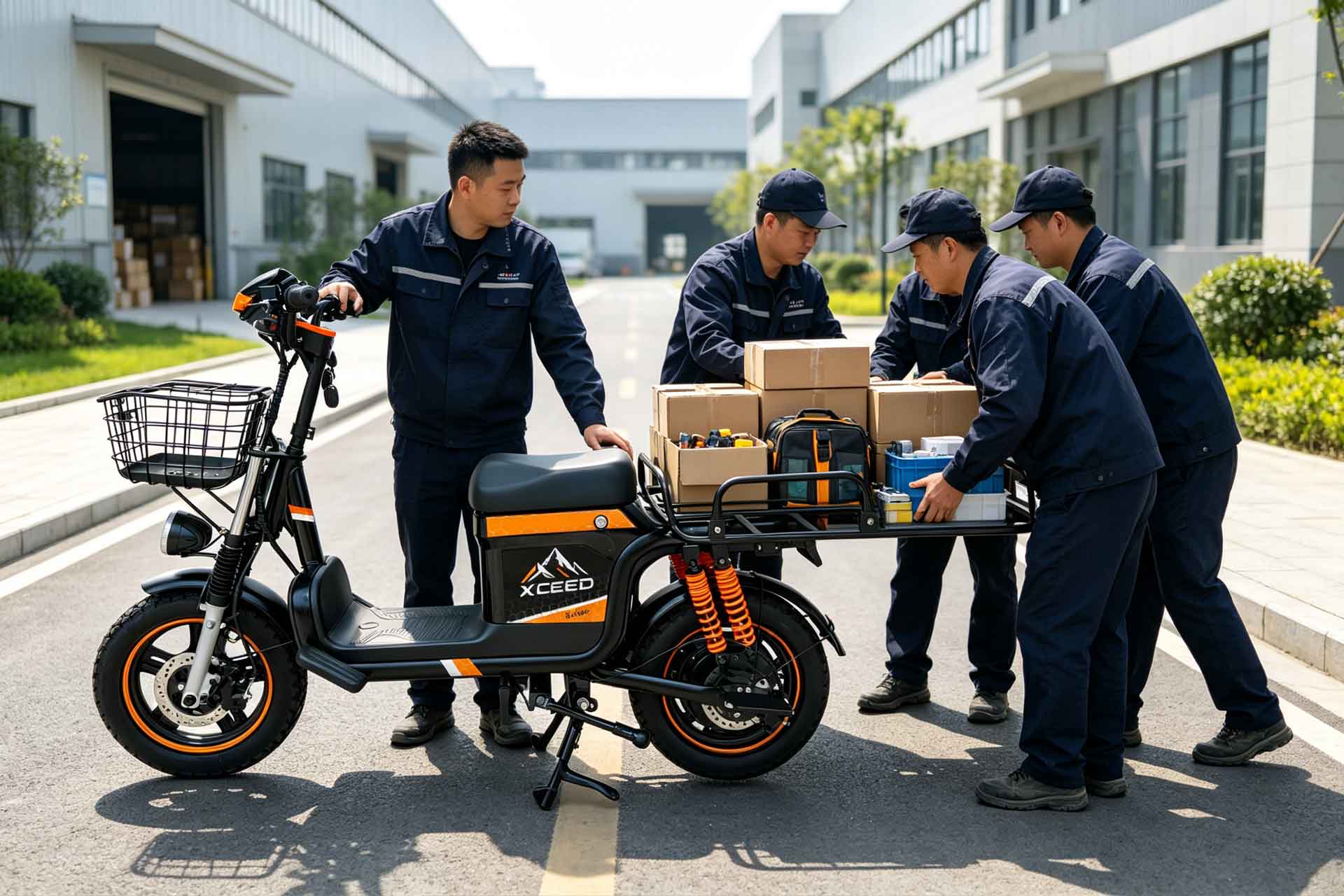
1TP2 T déclare exploiter une installation de fabrication autonome de 15 000 m2 couvrant le développement de moules, la production de cadres, l'assemblage de véhicules, les essais et l'inspection de la qualité. La capacité intégrée verticalement mérite d’être vérifiée lors de l’évaluation de tout fournisseur.
Comment évaluer un fournisseur chinois de vélos électriques
Une évaluation du fournisseur doit couvrir plus que des photographies d’âge de l’entreprise ou d’usine.
Les domaines suivants sont beaucoup plus utiles pour les décisions d'achat.
1. Capacité de fabrication
Demandez quels processus sont réellement réalisés en interne.
Les domaines importants peuvent inclure :
- Production de cadres
- Soudage
- Peinture
- Montage véhicule
- Installation électrique
- Tests de batterie
- Tests de performance
- Inspection finale
- Emballage
Un fournisseur qui contrôle plus d'étapes de production peut avoir une plus grande capacité à gérer la cohérence et les calendriers de livraison.
2. R & D et Ingénierie
Une équipe d'ingénierie expérimentée devient importante lorsque vous avez besoin de plus qu'un produit standard.
Les modifications de la structure du cadre, des systèmes électriques, de l'emplacement de la batterie, du freinage, de la suspension ou de la configuration du moteur doivent être évaluées techniquement avant la production.
Demandez des commentaires techniques
Ne vous contentez pas d'envoyer une liste des spécifications souhaitées.
Demandez au fournisseur si ces spécifications fonctionnent ensemble de manière sûre et efficace.
Un fabricant professionnel devrait être prêt à discuter des compromis entre la puissance du moteur, la capacité de la batterie, le poids, la portée, le coût et les performances cibles.
3. Expérience d'exportation
Exportation d'un Vélo électrique chinois implique plus que la fabrication.
L'emballage, la documentation, le transport de la batterie, la certification, les exigences douanières, les pièces de rechange et la logistique peuvent tous affecter la livraison finale.
Un fournisseur familier avec les projets internationaux peut contribuer à réduire les retards évitables.
1TP2 T rapporte une expérience au service de marchés, notamment l'Europe, l'Asie centrale, l'Asie du Sud-Est, le Moyen-Orient et d'autres régions internationales. Gamme de produits pour vélos électriques
Un fournisseur fort devrait avoir des produits adaptés à vos clients cibles plutôt que de simplement proposer autant de modèles que possible.
Les acheteurs peuvent examiner le portefeuille actuel de mobilité électrique de 1TP2 T par l'intermédiaire de son gamme de produits pour vélos électriques, (, qui inclut rétro, lifestyle, cargo, et d'autres modèles de mobilité). Voir les produits de vélo électrique Hongtu Future Vélos électriques
Les modèles de style de vie peuvent convenir aux déplacements domicile-travail, aux loisirs et aux marchés récréatifs.
1TP2 T répertorie actuellement des produits tels que
- 750 W Modèle tout-terrain à double suspension pour pneus gras
- Vélo électrique tout-terrain à gros pneus 750 W avec suspension unique
- Modèle de banlieue urbaine de style S7 Moto
- ZX01
Ces modèles fournissent différents points de départ pour les distributeurs ciblant les utilisateurs urbains et récréatifs. vélos ctric
Le style rétro peut aider un distributeur à rivaliser grâce à l'identité du produit plutôt qu'à la seule spécification.
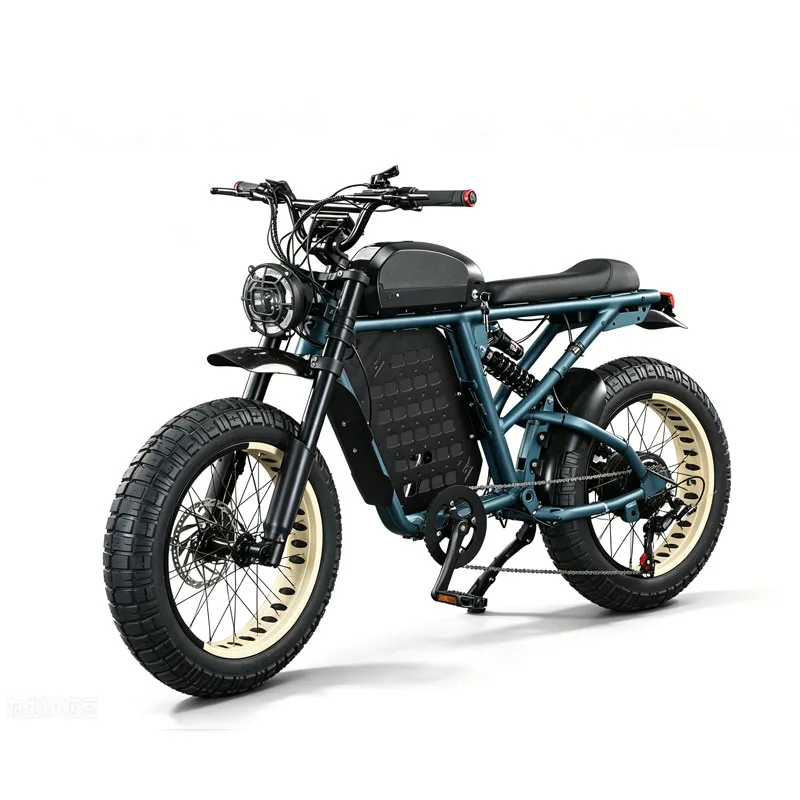
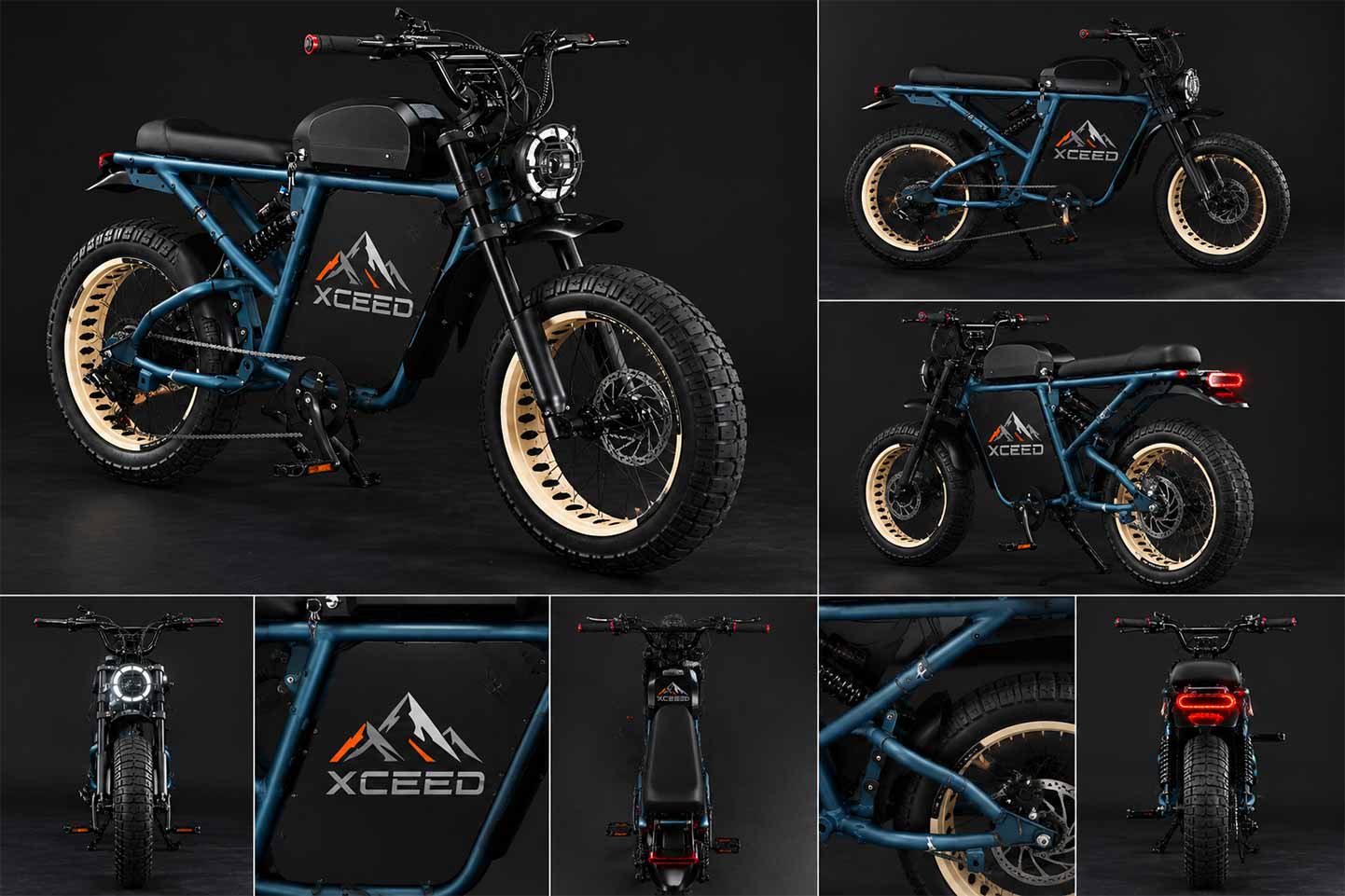
Les vélos électriques inspirés des motos peuvent plaire aux clients qui donnent la priorité à l'apparence, aux pneus larges, aux cadres substantiels, aux sièges plus grands et à l'éclairage distinctif.
Vélos électriques à pneus gras
Les modèles de pneus gras sont populaires pour une utilisation récréative, urbaine et à surface mixte.
Un modèle 1TP2 T utilise un cadre en aluminium renforcé de 6061, un moteur de moyeu de 48 V 500 W, une batterie de 48 V 18 Ah, des composants de transmission Shimano, des freins à disque et des pneus de 20. 4.0. rouducts par Market
Ne commencez pas par la question :
“Quel est votre modèle le moins cher ?”
Une meilleure question est la suivante
“Quelle configuration correspond à mon client cible, prix de détail cible, réglementations locales, terrain et utilisation attendue ?”
Cette approche rend les décisions d’approvisionnement beaucoup plus utiles commercialement.
Comment vérifier la qualité du vélo électrique chinois
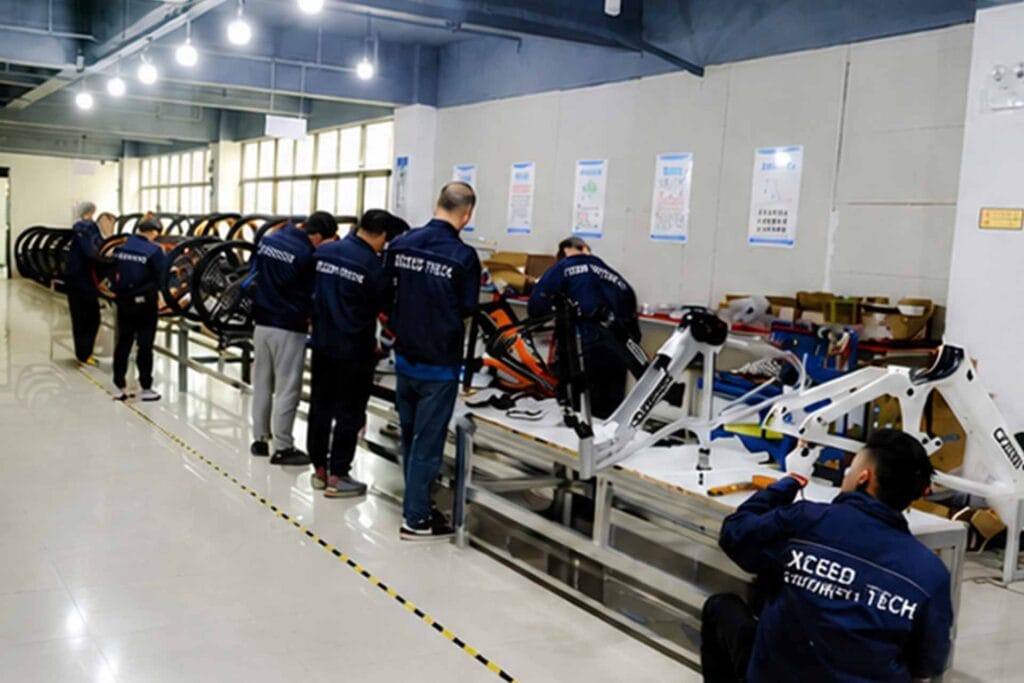
La qualité est l'une des parties les plus importantes de la sélection des fournisseurs.
Un échantillon attrayant ne signifie pas automatiquement que des centaines d’unités produites en série maintiendront le même standard.
Qualité du cadre
Inspectez la cohérence du soudage, l'alignement du cadre, la qualité du revêtement, le cheminement des câbles, les points de montage et la finition structurelle.
Une mauvaise cohérence du cadre peut créer des problèmes difficiles à corriger après l'assemblage.
Moteur
La puissance du moteur doit correspondre à l'utilisation prévue du vélo, au poids du véhicule, à la taille des roues et aux réglementations locales.
Ne comparez pas Watts seul
Un nombre de puissance plus élevé ne signifie pas automatiquement un meilleur vélo.
La distribution de couple, le réglage du contrôleur, l'efficacité, la gestion de la température, le bruit et la fiabilité comptent également.
Batterie
La batterie est l’un des composants les plus rentables et les plus à risque d’un vélo électrique.
Les acheteurs devraient poser des questions sur :
- Fournisseur de cellules
- Chimie de la batterie
- Tension nominale
- Capacité nominale
- Système de gestion de batterie
- Protection de charge
- Protection de décharge
- Chargeur spécifications
- Attentes cycle-vie
- Disponibilité de remplacement
Contrôleur et câblage
Le contrôleur détermine la manière dont l'énergie est délivrée entre la batterie et le moteur.
Inspectez la qualité des connecteurs, le routage des fils, l'imperméabilisation, l'installation du contrôleur, la gestion de la chaleur et l'intégration du système électrique.
Système de freinage
Les spécifications du frein doivent correspondre au poids du véhicule et à la vitesse de fonctionnement prévue.
Les freins à disque hydrauliques peuvent convenir à des configurations plus performantes, tandis que des systèmes plus simples peuvent être acceptables pour les applications à plus faible vitesse.
Certification et conformité des vélos électriques
Ne présumez jamais que la certification existante d'un fournisseur couvre automatiquement votre configuration exacte de produit.
Les exigences de certification dépendent du marché de destination, du type de produit, du système électrique, de la batterie, de la puissance du moteur et des réglementations locales.
UL 2849
Pour les acheteurs ciblant les marchés américains pertinents, UL 2849 est une référence importante pour les systèmes électriques de vélos électriques.
UL explique que l'UL 2849 évalue la transmission électrique combinée, le système de batterie et le système de chargeur plutôt que de visualiser chaque composant de manière isolée. Lisez le guide de sécurité du vélo électrique UL 2849 d'ULquestions de sécurité Ry
La Commission américaine de sécurité des produits de consommation a exhorté les fabricants et importateurs de vélos électriques et autres dispositifs de micromobilité à se conformer aux normes de sécurité applicables, notant les risques d'incendie associés aux systèmes de batteries lithium-ion dangereux. Lire le Guide de sécurité de la micromobilité CPSCExigences du marché
Les acheteurs européens devront peut-être également prendre en compte les exigences et normes telles que la norme EN 15194 et d'autres exigences applicables en matière de sécurité électrique, CEM, des batteries et des produits en fonction du produit spécifique.
L'aperçu d'UL sur les tests européens de vélos électriques fait référence à la norme EN 15194, ainsi qu'aux exigences supplémentaires en matière de batteries et d'électricité. érifier le modèle exact
N'acceptez pas de certificat simplement parce que la raison sociale du fournisseur y figure.
Vérifier:
- Numéro de certificat
- Laboratoire d'essais
- Modèle de produit
- Modèle batterie
- Norme applicable
- Expiration ou validité
- Si votre configuration personnalisée est couverte
Services de vélos électriques chinois OEM et ODM
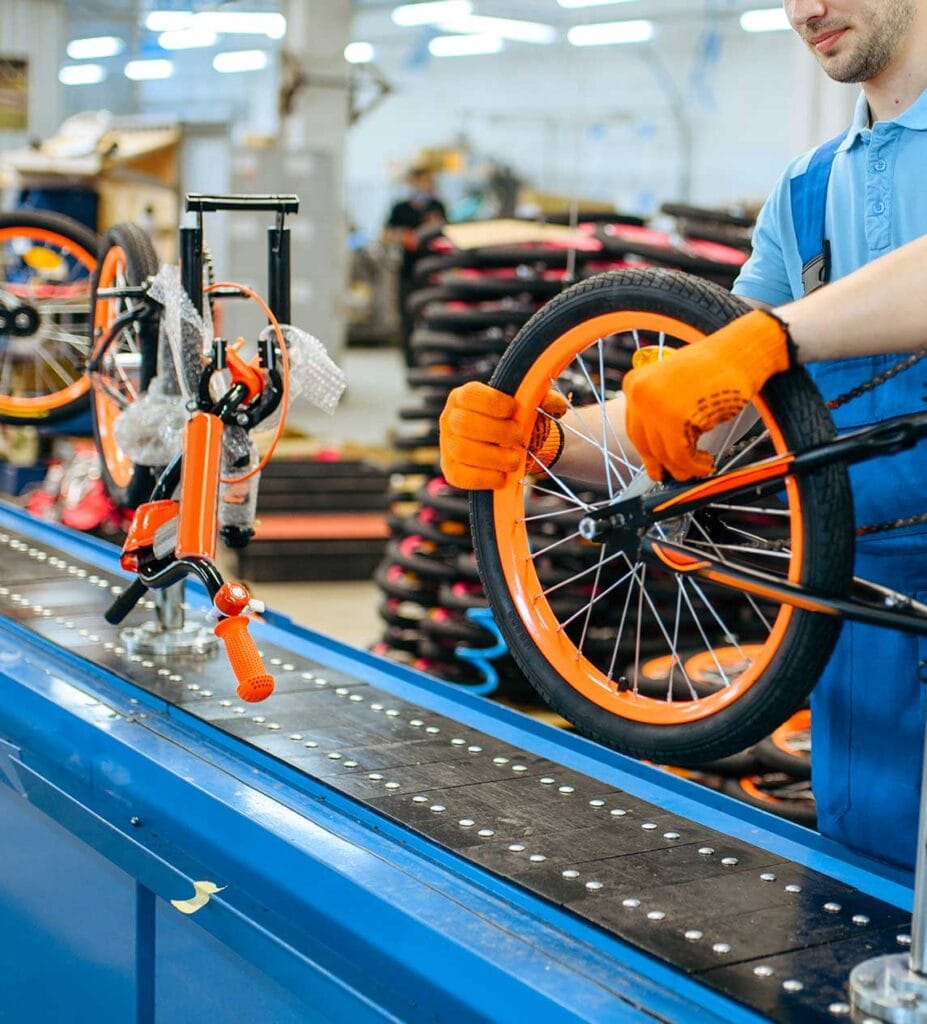
Pour les importateurs qui construisent leurs propres marques, la capacité OEM et ODM peut être plus importante que l'accès à un grand catalogue de produits.
Vélos électriques OEM
La fabrication OEM commence normalement par une plate-forme existante ou éprouvée et l'adapte à votre marque et à vos spécifications.
Les options typiques incluent :
- Logo
- Graphiques de cadres
- Couleur
- Capacité de la batterie
- Moteur
- Contrôleur
- Affichage
- Système de freinage
- Suspension
- Taille des pneus
- Accessoires
- Emballage
Le service OEM de Hongtu Future prend en charge la fabrication de produits, la marque, les modifications de configuration, le support de la chaîne d'approvisionnement, l'assistance à l'exportation et le support technique. Explorez les services OEM et ODM Hongtu Futurevélos Ric
ODM va plus loin.
Au lieu de simplement modifier un modèle existant, le fabricant peut participer à la conception industrielle, au développement de cadres, à la conception de systèmes électriques, à la production de prototypes, aux tests et à la production de masse.
Quand faut-il choisir l’ODM ?
ODM a plus de sens lorsque :
- Il vous faut un design exclusif.
- Les produits existants ne peuvent pas répondre à votre positionnement.
- Vous voulez une différenciation de marque plus forte.
- Vous vous attendez à des volumes de commandes à long terme.
- Vous voulez que les concurrents aient des difficultés à copier votre produit exact.
Étiquette Privée
Les projets de marque privée sont généralement plus rapides que le développement complet de l'ODM.
L'impression de logo, les graphiques de cadre, l'emballage, les manuels, les autocollants, les étiquettes de produits et la personnalisation des couleurs peuvent créer une marque reconnaissable sans développer une toute nouvelle plate-forme de véhicule.
Tests d'échantillons avant les commandes en gros
L'une des règles les plus importantes lors de l'approvisionnement a Vélo électrique chinois est simple:
N'évaluez jamais un fournisseur à partir des seules spécifications.
Commandez et testez un échantillon.
Que devriez-vous tester ?
Performance d'équitation
Testez l'accélération, le freinage, la direction, les vibrations, le bruit, la suspension, l'escalade et la stabilité.
Le vélo doit être évalué dans des conditions similaires à la manière dont vos clients l'utiliseront réellement.
Performance de la batterie
Comparez la plage réelle avec la plage attendue.
Répétez les tests sous différents modes de conduite et charges lorsque cela est possible.
Qualité d'assemblage
Inspectez les boulons, les connecteurs, le cheminement des câbles, le réglage des freins, l'alignement des roues, l'installation de l'affichage et la finition générale.
Emballage
L'emballage est souvent ignoré lors de l'examen des échantillons.
Cependant, pour les commandes à l'exportation, une protection insuffisante peut créer des rayures, des composants pliés, des affichages cassés et des réclamations de garantie avant même que le vélo n'atteigne le client.
Contrôle de qualité avant expédition
L'approbation des échantillons n'est que le début.
L'ordre de production doit correspondre à l'échantillon approuvé.
1TP2 T décrit un processus de fabrication qui comprend la vérification des composants, l'inspection de l'assemblage, les essais électriques, les essais de performance de la batterie, la simulation routière et les contrôles de qualité finaux. Inspection des composants
Les composants clés doivent être vérifiés avant l'assemblage.
Cela permet d'identifier les moteurs, batteries, freins, écrans, contrôleurs, pneus ou autres composants incorrects avant leur entrée en production.
Inspection de l'Assemblée
Les contrôles d'assemblage doivent vérifier le couple, l'alignement des roues, le freinage, le câblage, l'installation de la suspension, les accessoires et la qualité cosmétique.
Tests électriques
Les fonctions électriques doivent être vérifiées avant l'emballage.
Fonctions clés
Testez le moteur, l'accélérateur ou l'assistance à la pédale, l'affichage, l'éclairage, le chargeur, la batterie, le contrôleur, le klaxon, les indicateurs et tout autre équipement électrique installé.
Inspection finale
Avant expédition, confirmez que les unités finales correspondent :
- Échantillon approuvé
- Bon de commande
- Fiche technique de spécification
- Exigence de couleur
- Exigence de marque
- Spécification d'emballage
- Quantité
- Accessoires
Prix du fournisseur vs coût total d'approvisionnement
Un devis bon marché peut devenir un achat coûteux.
Le coût réel d'un Vélo électrique chinois devrait inclure beaucoup plus que son prix d'usine.
| Zone de coût | Ce que les acheteurs devraient considérer |
| Prix produit | Coût unitaire départ usine ou FOB |
| Personnalisation | Couleurs, logos, composants, outillage |
| Test | Échantillons et certification |
| Emballage | Carton d'exportation et protection |
| Expédition | Livraison maritime, ferroviaire, aérienne ou locale |
| Douanes | Droits et charges locales |
| Pièces de rechange | Inventaire initial des pièces de rechange |
| Garantie | Composants de remplacement et main-d'œuvre |
| Taux de défaut | Retours et réclamations clients |
| Risque d'inventaire | Modèles lents |
Prix le plus bas par rapport au risque le plus bas
Un fournisseur un peu plus cher peut créer un coût total inférieur s'il prévoit
- Une meilleure qualité de cohérence
- Taux de défauts plus faibles
- Meilleur emballage
- Support technique plus rapide
- Pièces de rechange fiables
- Livraison stable
- Documentation précise
Pensez au-delà du premier ordre
Pour un distributeur, la rentabilité est rarement déterminée par un seul envoi.
La stabilité des fournisseurs devient plus importante après le début des commandes répétées.
Une liste de contrôle pratique des fournisseurs chinois de vélos électriques
Avant de confirmer un fournisseur, utilisez une liste de contrôle structurée.
Vérification de l'entreprise
- Est-ce un fabricant ou une société commerciale ?
- Depuis combien de temps fonctionne-t-il ?
- Où est l'usine ?
- Quelles étapes de production sont réalisées en interne ?
- Le fournisseur peut-il fournir la documentation de l'usine ou l'inspection vidéo ?
Vérification Produit
- Une fiche détaillée des spécifications est-elle disponible ?
- Les composants peuvent-ils être identifiés par marque et modèle ?
- La configuration peut-elle être personnalisée ?
- L'échantillon correspond-il à la citation ?
Vérification de la qualité
- L'inspection entrante est-elle effectuée ?
- Les tests électriques sont-ils inclus ?
- Les performances de la batterie sont-elles testées ?
- Des essais routiers ou une simulation sont-ils effectués ?
- L'inspection finale est-elle terminée avant expédition ?
Vérification de la conformité
- Quelles certifications sont disponibles ?
- Les certificats couvrent-ils le modèle exact ?
- La configuration répond-elle aux exigences du marché de destination ?
- Le fabricant peut-il prendre en charge des tests supplémentaires lorsque cela est nécessaire ?
Vérification d'entreprise
- Qu'est-ce que le MOQ ?
- Quel est le délai de production ?
- Quelles sont les modalités de paiement ?
- Quelle garantie est fournie ?
- Des pièces de rechange sont-elles disponibles ?
- Comment les allégations de qualité sont-elles traitées ?
Pourquoi considérer 1TP2 T comme un fournisseur chinois de vélos électriques ?
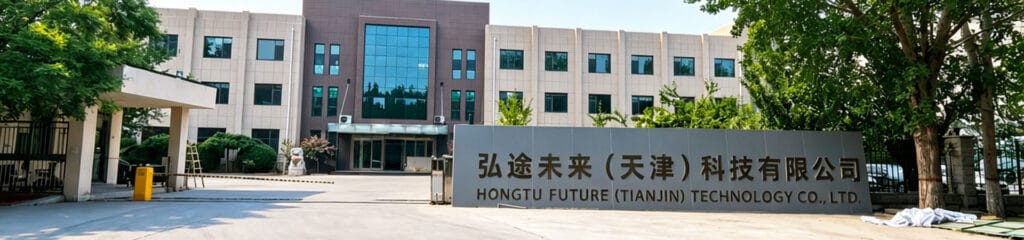
Pour les acheteurs à la recherche d'un partenaire de fabrication plutôt que seulement d'un vendeur de produits, 1TP2 T offre plusieurs capacités qui méritent d'être évaluées.
La société déclare qu'elle a été créée en 2014 et exploite une usine de fabrication autonome de 15 000 m2 à Tianjin, dotée de capacités de développement de moules, de fabrication de cadres, d'assemblage, de test de produits et d'inspection de l'élaboration
Son portefeuille actuel couvre plusieurs catégories de mobilité électrique, notamment les vélos électriques lifestyle, les vélos rétro électriques, les véhicules cargo et les tricycles électriques. DM
1TP2 T offre la fabrication OEM, le développement d'ODM, l'étiquetage privé, la personnalisation des composants, la personnalisation de l'apparence, la configuration des performances, l'emballage et le support à l'exportation de projets
La société déclare qu'elle prend en charge à la fois les commandes à l'essai et la fabrication en plus grand volume, ce qui permet aux acheteurs de tester un marché avant de mettre à l'échelle les Types d'acheteurs
Ces capacités peuvent être pertinentes pour
- Distributeurs de vélos électriques
- Importateurs
- Chaînes de vente au détail
- Marques de marque privée
- Marques en ligne
- Opérateurs de flotte
- Entreprises locatives
- Entreprises d'approvisionnement de projets
FAQ À propos des fournisseurs chinois de vélos électriques
Comment puis-je trouver un fournisseur chinois fiable de vélos électriques ?
Commencez par vérifier si l'entreprise dispose d'une réelle capacité de fabrication, d'un support technique, de procédures de contrôle qualité, d'une expérience d'exportation, de certifications et d'un support après-vente.
Toujours commander un échantillon avant de passer une commande importante.
Les vélos électriques chinois sont-ils de bonne qualité ?
La qualité varie considérablement entre les fournisseurs et les configurations.
La Chine peut fabriquer des produits d'entrée de gamme et de haute spécification La question importante est de savoir comment les composants sont sélectionnés, comment le produit est conçu, comment la production est contrôlée et dans quelle mesure chaque commande est inspectée.
Comment savoir si un fournisseur de vélos électriques est une véritable usine ?
Demandez des informations sur l'usine, des vidéos de production, de la documentation commerciale, des détails sur le processus de production et des inspections vidéo en direct.
Vous pouvez également poser des questions techniques qui nécessitent des connaissances directes en ingénierie.
Dois-je acheter dans une usine ou une société commerciale ?
Pour un approvisionnement simple dans de nombreuses catégories de produits, une société commerciale peut être pratique.
Pour les projets OEM à long terme, une personnalisation plus approfondie, des modifications techniques et une production répétée stable, travailler directement avec un fabricant peut offrir un meilleur contrôle.
Un fabricant chinois de vélos électriques peut-il créer ma propre marque ?
Oui. De nombreux fabricants OEM soutiennent l'étiquetage privé.
La personnalisation peut inclure des logos, des couleurs, des graphiques, des écrans, des batteries, des moteurs, des freins, des emballages, des manuels, des étiquettes et des accessoires.
Puis-je commander un échantillon avant d'acheter en gros ?
Un fournisseur professionnel devrait normalement soutenir l'évaluation d'échantillon.
L'échantillonnage est particulièrement important lorsque vous travaillez pour la première fois avec un fournisseur ou que vous développez un produit personnalisé.
Quelles certifications dois-je demander à un fournisseur de vélos électriques ?
Cela dépend de l'endroit où le produit sera vendu.
Par exemple, les projets américains pertinents devront peut-être prendre en compte des normes telles que UL 2849, tandis que les produits européens peuvent impliquer la norme EN 15194 et d'autres exigences réglementaires applicables.
Confirmez toujours les exigences auprès de l’autorité de test ou de régulation appropriée pour votre marché.
Que dois-je inspecter sur un échantillon de vélo électrique ?
Inspectez le cadre, le soudage, la peinture, la batterie, le chargeur, le moteur, le contrôleur, l'affichage, les freins, la suspension, les roues, les pneus, l'éclairage, les connexions électriques, les performances de conduite, l'emballage et la documentation.
Comment puis-je réduire les risques lors de ma première commande ?
Commencez par une spécification clairement documentée, un échantillon approuvé, une commande à l'essai plus petite lorsque cela est pratique, une inspection de qualité avant expédition, un plan de pièces de rechange et des conditions de garantie écrites.
Quelle est la question la plus importante à poser à un fournisseur chinois de vélos électriques ?
Au lieu de demander seulement “Quel est votre meilleur prix ?”, demandez :
“Comment vous assurerez-vous que chaque unité de production correspond à l'échantillon approuvé et respecte mes exigences cibles du marché ?”
La réponse vous en dira beaucoup plus sur le professionnalisme du fournisseur.
Conclusion
Choisir le droit Vélo électrique chinois le fournisseur exige plus que la comparaison des photos et des devis de produits.
Un approvisionnement réussi commence par la vérification de la fabrication, les tests de produits, l'examen de la certification, l'analyse des composants, le contrôle qualité, l'approbation des échantillons, la capacité de personnalisation et le support après-vente à long terme.
Pour les distributeurs et les marques de marque privée, le meilleur fournisseur n'est généralement pas l'entreprise offrant le prix initial le plus bas. C'est le fabricant qui peut constamment fournir le produit correct, répondre aux exigences spécifiques du marché, maintenir la qualité des commandes répétées, résoudre les problèmes techniques et se développer avec votre entreprise.
1TP2 T fournit un exemple utile de ce modèle d'approvisionnement basé sur l'usine, combinant la fabrication de vélos électriques, le développement de produits, la personnalisation OEM/ODM, l'inspection de la qualité et le support d'approvisionnement international. Les acheteurs peuvent examiner le portefeuille de produits actuel de l'entreprise avant de sélectionner une plate-forme pour la vente en gros ou la personnalisation. Explorer les produits Hongtu Futures planifiant un label privé ou une coutume Vélo électrique chinois projet, la prochaine étape devrait être de définir le marché cible, le prix de vente attendu, les exigences en matière de moteurs et de batteries, les besoins de certification, l'image de marque, la quantité commandée et le plan de livraison avant de demander un devis de fabrication détaillé. Démarrez un projet de vélo électrique OEM ou ODM