Table des matières
Principaux points à retenir :
- Un Tuk Tuk électrique doit être sélectionné en fonction de la capacité en passagers, du kilométrage quotidien, de la pente de la route, du climat, des conditions de recharge et des réglementations locales.
- La tension de la batterie ne détermine pas à elle seule l’autonomie ; la capacité, la charge du véhicule, la vitesse, la température, la surface de la route et les habitudes de conduite affectent toutes les performances réelles.
- Le transport de passagers, le tourisme, la mobilité dans les centres de villégiature, les voyages communautaires et les flottes commerciales nécessitent différentes configurations de véhicules.
- La recharge assistée par l'énergie solaire peut compléter la recharge conventionnelle, mais elle ne doit pas être traitée comme un remplacement complet de la recharge sur réseau dans chaque environnement d'exploitation.
- Les importateurs doivent comparer le coût total d'exploitation, la disponibilité des composants, le contrôle de qualité, le support de personnalisation et le service après-vente plutôt que de se concentrer uniquement sur le coût d'achat initial.
- Avant de passer une commande groupée, les acheteurs doivent vérifier la classification des véhicules, les exigences de certification, la documentation des batteries, les pièces de rechange, l'emballage et les règles d'immatriculation locales.
Introduction
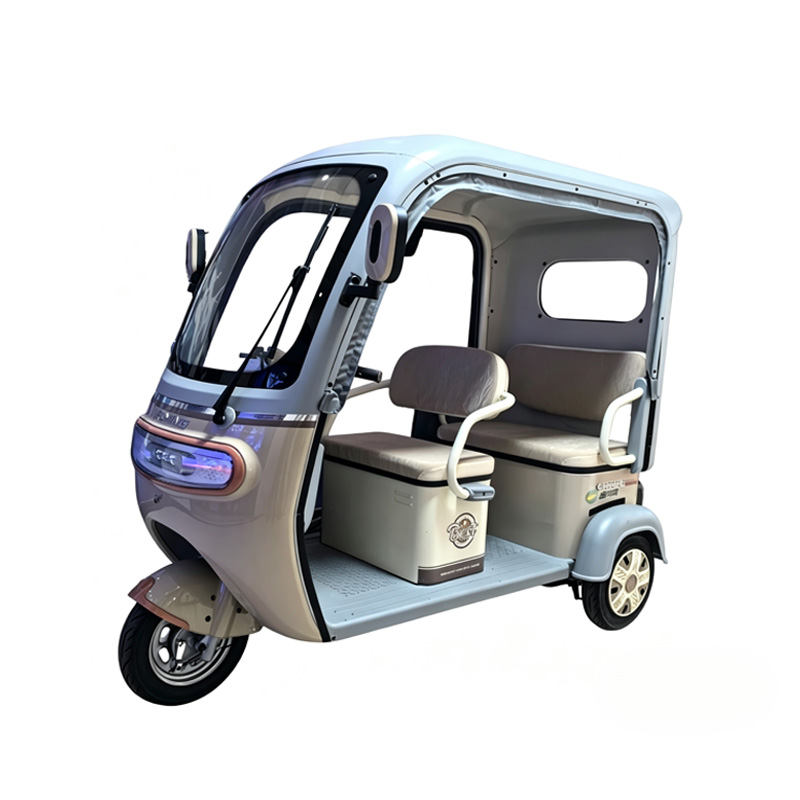
L'Electric Tuk Tuk est passé d'un simple véhicule de courte distance à une solution de mobilité pratique pour le transport de passagers, le tourisme, les services communautaires, les centres de villégiature, les flottes commerciales et les entreprises de véhicules de marque privée.
Contrairement à un pousse-pousse automatique à essence conventionnel, un modèle électrique utilise une batterie, un contrôleur, un moteur électrique et un système de charge pour produire une propulsion. Il peut offrir un fonctionnement silencieux, une maintenance quotidienne simplifiée et une configuration flexible pour le transport à basse vitesse.
Les deux et trois roues électriques prennent également une importance croissante dans la transition mondiale vers une mobilité urbaine plus propre L'Agence internationale de l'énergie a signalé que les deux et trois roues électriques restaient le segment du transport routier le plus électrifié en 2025, avec environ 11 millions de modèles électriques vendus dans le monde au cours de l'année.
Cependant, tous les Electric Tuk Tuk ne conviennent pas à tous les acheteurs Un véhicule qui fonctionne bien dans une zone touristique plate peut ne pas convenir aux routes escarpées, à l'exploitation commerciale continue ou à un marché avec des exigences strictes en matière d'homologation des véhicules.
Ce guide explique les principales technologies, configurations, applications, points de comparaison et questions d'achat que les acheteurs devraient évaluer en 2026.
Qu'est-ce qu'un Tuk Tuk électrique
Un Tuk Tuk électrique est un véhicule compact à trois roues propulsé par une transmission électrique Selon sa conception, il peut être utilisé pour transporter des passagers, transporter des marchandises, fournir des services touristiques ou soutenir la mobilité sur de courtes distances au sein des communautés et des sites commerciaux.
Le terme est étroitement lié au pousse-pousse électrique, au pousse-pousse électronique, au tricycle de passagers, au pousse-pousse électrique et au véhicule électrique à trois roues. Le nom exact varie selon les régions, tandis que les autorités locales peuvent classer le même véhicule comme moto, tricycle, véhicule à basse vitesse, véhicule utilitaire de tourisme ou autre catégorie réglementée.
Une explication générale du concept du véhicule est disponible dans le Aperçu Wikipédia des pousse-pousse électriques.
Structure de base du véhicule
La plupart des modèles combinent une seule roue avant avec deux roues arrière Cette disposition crée une empreinte de virage compacte tout en offrant une zone passagers arrière ou une plate-forme de fret.
La structure comprend normalement un cadre, une suspension, un système de freinage, des panneaux de carrosserie, des commandes du conducteur, des sièges passagers, un moteur, un contrôleur, une batterie, un chargeur, un faisceau de câbles, un tableau de bord, des lumières et des pneus.
Tuk Tuk pour passagers
Un modèle de passager est conçu principalement pour transporter des personnes sur des itinéraires urbains courts ou moyens. Les utilisations typiques comprennent le transport de quartier, les transferts de villégiature, les services touristiques, les voyages sur le campus et les opérations de taxi local.
Les acheteurs peuvent explorer le courant de Hongtu Future Gamme Passagers Tricycle pour comparer les configurations fermées, semi-fermées, de loisirs et assistées par l'énergie solaire La catégorie comprend actuellement des modèles pour le transport de passagers, la mobilité, les voyages d'agrément et l'exploitation assistée par l'énergie solaire.
Cargo Tuk Tuk
Une version cargo remplace une partie ou la totalité des sièges passagers par une plate-forme de chargement, un coffre, un rack ou un compartiment fermé. Il peut être utilisé pour la livraison locale, le transport marchand, l'entretien des installations, la distribution de nourriture ou la logistique commerciale légère.
Les véhicules de transport de marchandises et de tourisme ne doivent pas être traités comme interchangeables. Leur chargement du châssis, leur configuration des essieux, la demande de freinage, leur répartition du poids et leurs cycles de fonctionnement peuvent différer considérablement.
Pourquoi les tuks électriques comptent en 2026
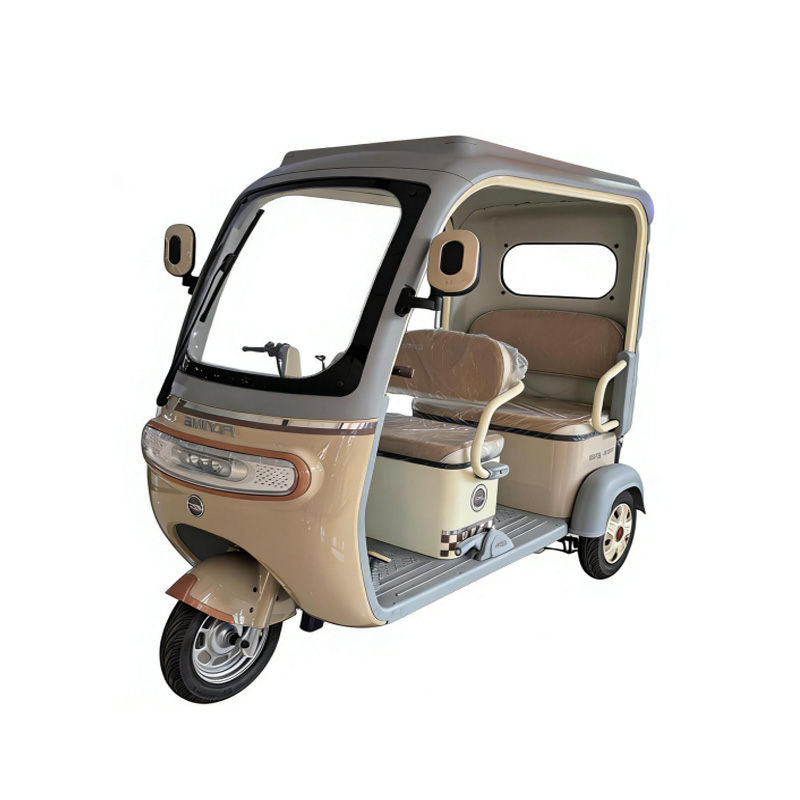
Les trois-roues électriques sont particulièrement pertinents dans les régions où les trajets courts, les routes étroites, le transport commercial de passagers et la mobilité du dernier kilomètre sont courants.
Le Programme des Nations Unies pour l'environnement identifie les deux et trois roues comme une priorité majeure pour l'électrification des transports, surtout sur les marchés en développement et en transition Le PNUE appuie également des programmes de deux et trois roues électriques dans des pays d'Afrique, d'Asie, d'Amérique latine, et des Caraïbes.
Mobilité urbaine à faible vitesse
De nombreux déplacements quotidiens ne nécessitent pas de voiture de tourisme pleine grandeur Un trois-roues compact peut être plus facile à utiliser dans les rues bondées, les zones résidentielles, les destinations touristiques, les parcs industriels et les campus privés.
Sa valeur vient de la correspondance du véhicule à l'itinéraire Il n'est pas destiné à remplacer chaque voiture, bus ou fourgon commercial, mais il peut combler le vide entre la marche, le transport à deux roues et les véhicules plus gros.
Potentiel de flotte commerciale
Les véhicules utilitaires à forte utilisation peuvent bénéficier considérablement de l’électrification, car la consommation d’énergie et l’entretien courant s’accumulent sur de nombreux déplacements quotidiens.
La Banque mondiale note que les segments de véhicules à usage élevé, notamment les deux et trois roues, peuvent procurer des avantages économiques grâce à des coûts d'exploitation moins élevés, à des transports urbains plus propres et à un meilleur accès à la mobilité.
Positionnement flexible du produit
Un importateur peut positionner la même catégorie de véhicules de base pour plusieurs marchés :
- Transport local de passagers
- Transferts hôtel et resort
- Visites panoramiques
- Mobilité communautaire résidentielle
- Support aéroport ou gare
- Transport sur campus
- Patrouilles de sécurité privées
- Services de flotte commerciale
- Expériences touristiques de marque
- Projets de mobilité assistée par l'énergie solaire
Hongtu Future solutions d'application de mobilité électrique couvrir les déplacements domicile-travail, la livraison, le tourisme, les transports industriels, les services publics et les projets commerciaux personnalisés.
Tuk Tuk électrique contre Tuk Tuk à essence
Le bon choix dépend de la longueur de l'itinéraire, de l'accès à l'énergie, de la capacité de maintenance, de l'utilisation des véhicules, des coûts locaux du carburant et des conditions réglementaires.
| Facteur de comparaison | Tuk Tuk électrique | Tuk Tuk à essence |
|---|---|---|
| Source d'alimentation | Batterie rechargeable | Essence ou autre combustible liquide |
| Émissions locales d'échappement | Aucun pendant le fonctionnement électrique | Produit des émissions d'échappement |
| Bruit | Généralement inférieur | Généralement supérieur |
| Entretien courant de la transmission | Moins d'articles de service moteur traditionnels | Nécessite une maintenance liée au moteur |
| Renouvellement énergétique | Nécessite un accès et une heure de recharge | Reremplissage plus rapide du carburant |
| Longues routes continues | Limité par batterie et plan de charge | Soutenu par la disponibilité du carburant |
| Exploitation urbaine à basse vitesse | Bien adapté lorsqu'il est correctement configuré | Commun mais moins silencieux |
| Performances par temps froid | Les performances de la batterie peuvent diminuer | L'efficacité du moteur peut également être affectée |
| Planification énergétique de la flotte | Électricité et calendrier de recharge | Calendrier d'approvisionnement et de remplissage en carburant |
| Principale préoccupation de l'acheteur | Batterie, contrôleur, moteur, chargeur | Moteur, transmission, système de carburant |
Quand l’électricité est le meilleur choix
Un modèle électrique peut convenir lorsque le véhicule retourne à un lieu de recharge fixe, parcourt des itinéraires quotidiens prévisibles, fonctionne à des vitesses modérées et reçoit une inspection régulière.
Il est particulièrement attractif pour les stations balnéaires, les communautés fermées, les sites touristiques, les campus, les usines et les flottes de transport locales où la planification des itinéraires est plus facile.
Quand l’essence peut encore être pratique
Un véhicule à essence peut rester pratique dans les zones où l'électricité n'est pas fiable, où les itinéraires quotidiens sont extrêmement longs, où le temps de recharge est limité ou où le réseau de services de carburant est établi.
La comparaison correcte devrait donc être opérationnelle plutôt qu'idéologique Les acheteurs devraient calculer comment le véhicule sera réellement utilisé au lieu de supposer qu'un seul groupe motopropulseur est universellement meilleur.
Spécifications clés du Tuk Tuk électrique
Une fiche de spécification doit être lue comme un système connecté La sélection du plus gros moteur ou batterie ne produit pas automatiquement le meilleur véhicule.
Puissance du moteur
La puissance du moteur affecte l'accélération, la capacité de gravir des collines, les performances chargées et la capacité de maintenir la vitesse dans des conditions exigeantes.
Cependant, une puissance excessive du moteur peut augmenter la consommation d'énergie, la demande du contrôleur, le stress de la batterie et la complexité réglementaire. Le moteur idéal doit correspondre au poids du véhicule, à la charge utile, à la taille des pneus, à la pente de la route et à la vitesse de fonctionnement prévue.
Puissance nominale par rapport à puissance maximale
La puissance nominale décrit un niveau que le moteur est conçu pour maintenir dans des conditions spécifiées La puissance maximale est un maximum de courte durée et ne doit pas être utilisée comme seul indicateur de performance continue.
Les acheteurs doivent se demander si la valeur annoncée est la puissance nominale, la puissance maximale ou une étiquette marketing sans condition de test documentée.
Tension de la batterie
La tension influence l'architecture électrique et doit être adaptée au moteur, au contrôleur, au chargeur, au tableau de bord, au câblage et à d'autres composants.
Une tension plus élevée ne garantit pas automatiquement une plage plus longue La plage dépend plus directement de la capacité énergétique utilisable et de la consommation réelle d'énergie.
Capacité de la batterie
La capacité de la batterie peut être exprimée en ampères-heures, mais comparer les ampères-heures à lui seul peut être trompeur lorsque la tension diffère.
Pour une comparaison plus utile, les acheteurs peuvent examiner l'énergie nominale totale :
Énergie nominale de la batterie en wattheures = tension de la batterie. Capacité amph-heure
Par exemple, une batterie 60 V 32 Ah a plus d'énergie nominale qu'une batterie 60 V 20 Ah, en supposant la même chimie de batterie et les mêmes conditions de décharge utilisables.
Gamme du monde réel
La plage publiée est généralement mesurée dans des conditions d'essai sélectionnées La plage de fonctionnement réelle peut être inférieure en raison de :
- Poids du passager ou du fret
- Arrêts et accélérations fréquents
- Routes escarpées
- Faible pression des pneus
- Vitesse de conduite élevée
- Temps froid ou très chaud
- L'âge de la batterie
- Résistance au vent
- Mauvaises surfaces routières
- Utilisation de lumières et d'accessoires
Un fournisseur fiable devrait expliquer les conditions qui se cachent derrière une fourchette indiquée plutôt que de présenter un seul chiffre comme un résultat universel.
Contrôleur
Le contrôleur régule la puissance électrique entre la batterie et le moteur Il affecte la réponse à l'accélération, la compatibilité du moteur, la livraison de courant, les fonctions de protection et le comportement de conduite global.
Pour une utilisation commerciale, les acheteurs doivent confirmer le courant du contrôleur, le refroidissement, l'étanchéité, la qualité du connecteur, le support de diagnostic et la compatibilité avec les unités de remplacement.
Système de freinage
Le système de freinage doit correspondre à la masse du véhicule chargé et à l'itinéraire prévu Un tuk tuk transportant plusieurs passagers nécessite une évaluation de freinage différente d'un tricycle de loisirs léger.
Les acheteurs doivent examiner les types de freins avant et arrière, la conception des freins de stationnement, le comportement d'arrêt sous charge, la disponibilité des composants et les performances des freins sur les routes mouillées.
Pneus et Suspension
La taille des pneus affecte le confort, l'adhérence, la garde au sol, la capacité de charge, la maniabilité et la disponibilité de remplacement.
La suspension doit être évaluée avec la charge utile prévue Un essai en salle d'exposition déchargée peut ne pas révéler comment le véhicule se comporte lorsqu'il transporte des passagers sur des routes accidentées.
Options de batterie pour tuk tuks électriques
La sélection de la batterie est l'une des décisions d'achat les plus importantes car elle influence la portée, la charge, le poids du véhicule, la planification du remplacement et les coûts d'exploitation à vie.
Batterie au plomb
Les batteries au plomb sont familières sur de nombreux marchés et peuvent offrir un coût d'acquisition initial inférieur. Leurs inconvénients peuvent inclure un poids plus élevé, une densité d'énergie utilisable plus faible et une durée de vie plus courte dans des conditions de fonctionnement exigeantes.
Ils peuvent encore être pratiques lorsque l'approvisionnement de remplacement est largement disponible et que le véhicule suit des itinéraires quotidiens modérés.
Lithium Batterie
Les batteries au lithium offrent normalement un poids inférieur, une densité énergétique plus élevée et une durée de vie potentiellement plus longue lorsqu'elles sont prises en charge par un système de gestion de batterie correctement conçu.
L'acheteur doit confirmer la chimie de la cellule, le fournisseur de cellules, les fonctions de gestion de la batterie, la protection du boîtier, la compatibilité du chargeur, les conditions de garantie et les documents de transport.
Comparaison plomb-acide vs lithium
| Facteur Batterie | Plomb-Acide | Lithium |
| Acquisition initiale | Souvent plus bas | Souvent plus élevé |
| Poids | Supérieur | Inférieur |
| Densité énergétique | Inférieur | Supérieur |
| Efficacité de charge | Généralement inférieur | Généralement supérieur |
| Performances du cycle | Dépend fortement de la profondeur de décharge | Peut être plus fort avec une bonne gestion |
| Système de gestion de batterie | Généralement plus simple | Essentiel |
| Disponibilité de remplacement | Commun sur de nombreux marchés | Dépendant du marché |
| Meilleur ajustement | Projets sensibles aux coûts et à usage modéré | Projets d'autonomie, de poids et d'utilisation fréquente |
Système de gestion de batterie
Un système de gestion de batterie surveille et contrôle les conditions de fonctionnement importantes au sein d'une batterie au lithium. Il peut fournir une protection contre les surcharges, les surcharges, les surintensités, les courts-circuits et la température.
Sa présence n'élimine pas le besoin de charge, de stockage, d'inspection et d'entretien corrects. Les acheteurs doivent se demander quelles protections sont incluses et si des informations de diagnostic sont disponibles.
Tuk Tuk électrique solaire vs charge standard
Un modèle assisté par l'énergie solaire combine le système de batterie principal avec des panneaux solaires installés sur le toit du véhicule ou sur une autre surface appropriée.
Le système solaire peut compléter l'énergie de la batterie pendant que le véhicule est garé à l'extérieur ou fonctionne à la lumière du soleil appropriée La contribution réelle dépend de la surface du panneau, de l'intensité solaire, de la météo, de l'ombrage, de l'efficacité du système, de la consommation d'énergie du véhicule et de la durée de fonctionnement.
Tuk Tuk électrique standard
Un modèle standard reçoit la majeure partie ou la totalité de son énergie de la charge du réseau Il est plus facile à évaluer car l'entrée de charge et la capacité de la batterie peuvent être mesurées par un processus de charge contrôlé.
Cette configuration convient lorsque le véhicule a un accès fiable à un chargeur dans un dépôt, une maison, un hôtel, une usine ou une installation commerciale.
Tuk Tuk électrique à assistance solaire
Une version assistée par l'énergie solaire peut fournir une source d'énergie supplémentaire pendant le fonctionnement de la lumière du jour. Il peut être utile dans les régions ensoleillées, les zones de tourisme de plein air, les communautés et les projets qui valorisent les fonctionnalités d’énergies renouvelables.
Hongtu Future Solar Tuk Tuk, drapeau X1 combine un moteur de 650 W avec des options de batterie de 60 V 20 Ah ou 32 Ah, une charge assistée par l'énergie solaire, un tableau de bord intelligent et des pneus tubeless Ce sont des spécifications spécifiques au modèle et ne doivent pas être supposées s'appliquer à chaque véhicule solaire.
La recharge solaire suffit-elle à elle seule ?
Dans la plupart des cas d’approvisionnement, la recharge solaire doit être considérée comme une fonctionnalité supplémentaire plutôt que comme une source d’énergie illimitée.
Les acheteurs doivent demander des informations mesurables sur la puissance du panneau, l'efficacité de charge, la contribution énergétique quotidienne attendue, les conditions de test, le type de contrôleur, la compatibilité de la batterie et les performances par temps nuageux.
Choisir un Tuk Tuk électrique par application
L'application doit être définie avant que la configuration du véhicule ne soit sélectionnée.
Service de taxi pour passagers
Un taxi passager nécessite des sièges durables, une entrée et une sortie faciles, des freins fiables, une bonne visibilité, une protection du conducteur, des poignées pour les passagers, un éclairage et une batterie dimensionnée pour les déplacements quotidiens répétés.
Les acheteurs de flotte doivent également évaluer l'accès au nettoyage, les panneaux de carrosserie de remplacement, la disponibilité des pneus, la formation des conducteurs et la gestion des temps d'arrêt.
Tourisme et tourisme
Un Tuk Tuk électrique touristique doit équilibrer l'apparence, le confort, la visibilité, le fonctionnement silencieux et le potentiel de marque.
Les couleurs de carrosserie bicolores, les panneaux décoratifs, les toits de marque, les marches des passagers, l'éclairage et les accessoires audio peuvent aider à créer un produit touristique reconnaissable. Le véhicule doit toujours être évalué pour sa sécurité structurelle, sa pente d'itinéraire, sa protection contre les intempéries et ses règles locales en matière de service aux passagers.
Transport de villégiature et d'hôtel
Les hôtels et les centres de villégiature proposent généralement des itinéraires prévisibles entre les entrées, les chambres, les restaurants, les plages, les aires de stationnement et les zones d'activités.
Pour cette application, un contrôle fluide à basse vitesse, un fonctionnement silencieux, des sièges confortables, une protection contre les intempéries et une charge pratique peuvent être plus importants que la vitesse maximale.
Mobilité communautaire
Les communautés résidentielles peuvent utiliser des tricycles passagers compacts pour de courts trajets, des services immobiliers, une aide à la mobilité des personnes âgées ou des connexions entre les portes et les installations internes.
Le processus de sélection doit mettre l'accent sur le contrôle à basse vitesse, la stabilité du freinage, l'accès facile, la visibilité et un entretien simple.
Flottes commerciales et institutionnelles
L'approvisionnement de la flotte nécessite plus que la sélection d'un modèle de véhicule L'acheteur doit développer un système complet pour la charge, l'inspection, la formation des conducteurs, les pièces de rechange, la gestion de la batterie, la gestion de la garantie et les dossiers de maintenance.
Article de Hongtu Future sur fabrication de qualité et mobilité électrique succès commercial explique pourquoi l'ingénierie, la production standardisée, l'inspection, les tests de batterie, les tests de moteurs et les contrôles du système de freinage affectent la fiabilité des produits à long terme.
Comment calculer la bonne configuration
Une configuration pratique commence par les données d'itinéraire plutôt que par un catalogue de produits.
Étape 1 : Définissez l'itinéraire quotidien
Enregistrez la distance quotidienne totale, le trajet continu le plus long, le nombre d'arrêts, la surface de la route, la pente maximale, la vitesse moyenne et les fenêtres de recharge disponibles.
Un itinéraire avec des arrêts fréquents peut consommer plus d'énergie qu'un itinéraire fluide de même distance car le véhicule accélère à plusieurs reprises à basse vitesse.
Étape 2 : Calculez la charge de fonctionnement
Incluez le conducteur, les passagers, le fret, les accessoires en option et tout équipement transporté pendant le fonctionnement normal.
Ne comparez pas la charge utile uniquement avec la puissance théorique du moteur La capacité du châssis, la charge par essieu, les pneus, la suspension et le freinage doivent également supporter la charge prévue.
Étape 3 : Évaluer l'accès à la charge
Déterminez où le véhicule se chargera, combien d'heures sont disponibles, si plusieurs véhicules se chargeront simultanément et si le système électrique peut supporter la charge requise.
Les acheteurs de flotte doivent également prévoir une panne de chargeur, des interruptions de courant, une demande électrique de pointe et un stockage sûr de la batterie.
Étape 4 : Ajoutez une réserve de portée pratique
Un véhicule ne doit pas être sélectionné pour fonctionner chaque jour au bord de sa portée revendiquée.
Une réserve raisonnable permet de tenir compte du trafic, des détours, du vieillissement de la batterie, de la température, des passagers supplémentaires et des demandes d'exploitation inattendues. La réserve appropriée dépend du projet et doit être calculée à partir des conditions réelles de l'itinéraire.
Étape 5 : Exécutez un test d’échantillon chargé
Un échantillon doit être testé avec une charge utile réaliste sur un itinéraire représentatif Le test doit inclure l'accélération, le freinage, le virage, l'escalade, le temps de charge, la consommation d'énergie, le confort des passagers et la visibilité du conducteur.
Un bref essai déchargé à l'intérieur d'une usine ne peut remplacer une évaluation par itinéraire.
Comment évaluer un fabricant
Un fabricant professionnel de Tuk Tuk électrique devrait fournir plus qu'une photo de véhicule et une liste de spécifications de base.
Capacité de fabrication
Les acheteurs doivent déterminer si le fournisseur contrôle la production de cadres, l'assemblage, l'intégration électrique, les tests et l'inspection de la qualité ou s'il agit principalement en tant que revendeur.
1TP2 T déclare que sa base de production de Tianjin couvre le développement de moules, la production de cadres, l'assemblage, les tests de produits et l'inspection. Son aperçu de l'entreprise fournit des informations supplémentaires sur ses capacités de production et de personnalisation.
Documentation Qualité
Demander une documentation couvrant :
- Spécifications du véhicule
- Spécifications de la batterie et du chargeur
- Détails du moteur et du contrôleur
- Schémas de câblage
- Procédures d'inspection
- Informations d'emballage
- Listes de pièces détachées
- Manuels d'utilisation
- Instructions d'entretien
- Documents de certification disponibles
La documentation doit correspondre à la configuration exacte en cours d'achat Un certificat pour une version différente du moteur, de la batterie ou du véhicule peut ne pas s'appliquer au produit commandé.
Approbation de l'échantillon
Une spécification d'échantillon signée crée une référence pour la production de masse. Il doit documenter les marques de composants, les dimensions, la configuration électrique, les couleurs, les étiquettes, les accessoires, l'emballage et les attentes en matière de performances.
Tout changement approuvé doit être enregistré avant le début de la production.
Support pièces de rechange
Les importateurs doivent identifier les composants à usage élevé et à usure avant expédition. Ceux-ci peuvent inclure des pièces de frein, des pneus, des tubes ou des valves, des lumières, des interrupteurs, des câbles, des roulements, des pièces de suspension, des contrôleurs, des chargeurs, des écrans et des panneaux de carrosserie.
Un plan de pièces de rechange réduit les temps d'arrêt et empêche les pannes mineures de mettre un véhicule utilitaire hors service pendant une période prolongée.
Capacité OEM et ODM
Les acheteurs de marque privée peuvent exiger le placement de logo, les couleurs de la carrosserie, l'emballage, les manuels, les autocollants, les tableaux de bord, la capacité de la batterie, la configuration du moteur ou des accessoires spécifiques au marché.
La discussion de Hongtu Future sur Fabrication OEM pour les marques de mobilité électrique explique comment la sélection des composants, la marque, l'emballage, le développement d'échantillons, les tests et la production de masse s'intègrent dans un projet OEM.
Sécurité, certification et conformité au marché
Les réglementations relatives aux véhicules diffèrent considérablement d’un pays à l’autre et même d’une ville ou d’un État à l’autre.
Un Tuk Tuk électrique peut exiger une immatriculation de route, une homologation de type, une assurance, des limitations de vitesse, des permis de passagers commerciaux, la conformité à l'éclairage, des tests de freinage, des marquages d'identification du véhicule ou un permis de conduire.
Confirmez la catégorie du véhicule
Ne présumez pas qu'un produit décrit comme un tricycle pour passagers peut automatiquement être immatriculé comme véhicule routier sur le marché de destination.
L'acheteur doit obtenir des conseils écrits de l'autorité de transport compétente ou d'un spécialiste local qualifié de la conformité avant de finaliser la spécification.
Vérifiez la configuration exacte
La certification peut dépendre du moteur, du contrôleur, de la batterie, du chargeur, des pneus, de l'éclairage, des freins, de la vitesse, des dimensions et de la capacité des passagers.
La modification d'un composant majeur après la certification peut affecter la validité de la documentation approuvée.
Examinez la sécurité de la batterie
La sécurité de la batterie doit couvrir la qualité des cellules, la gestion de la batterie, la conception du boîtier, le câblage, les connecteurs, la protection contre les fusibles, la compatibilité de charge, la ventilation, la protection de l'eau, le transport, le stockage et la manipulation en fin de vie.
Le Cadre CEE-ONU pour la réglementation des véhicules fournit des informations sur les normes harmonisées des véhicules, tandis que ses réglementations techniques mondiales incluent les travaux liés à la sécurité des véhicules électriques et à la durabilité des batteries.
Plan de fin de vie de la batterie
Une batterie finit par perdre sa capacité utilisable et nécessite un remplacement, une réutilisation ou un recyclage responsable.
Les importateurs et les exploitants de flottes doivent comprendre les règles locales en matière de collecte, de transport, de stockage et de recyclage des batteries avant l'entrée en service des véhicules.
Erreurs courantes d’achat de Tuk Tuk Tuk électrique
Choisir uniquement par prix
Le devis le plus bas peut exclure une batterie appropriée, un chargeur fiable, des pièces de rechange, une inspection, une documentation ou un emballage de protection.
La meilleure comparaison est la valeur totale livrée et le coût d'exploitation prévu sur la période de service prévue.
Croire à la réclamation de portée maximale
Un chiffre de plage sans informations sur la charge utile, la vitesse, la route, la température et les conditions d'essai est difficile à utiliser.
Les acheteurs doivent demander un rapport d’essai de portée ou effectuer un essai d’itinéraire chargé indépendant.
Ignorer les réglementations locales
Un véhicule techniquement fonctionnel peut toujours ne pas convenir s'il ne peut pas être immatriculé, assuré, importé ou utilisé pour le service commercial de passagers.
La conformité doit être vérifiée avant les dépôts, l'image de marque ou la production de masse.
Commande Sans Pièces détachées
Les véhicules utilitaires génèrent des pertes lorsqu'ils ne peuvent pas fonctionner Un composant indisponible relativement peu coûteux peut créer des semaines d'immobilisation.
L'expédition initiale devrait comprendre une quantité prévue de pièces d'usure et de composants électriques critiques.
Utilisation d'une spécification pour chaque marché
Une région côtière chaude, une ville intérieure froide, une route touristique montagneuse et une communauté résidentielle plate ont des exigences opérationnelles différentes.
Le moteur, la batterie, les pneus, le freinage, la protection contre les intempéries, la résistance à la corrosion et la stratégie de charge doivent être ajustés en conséquence.
Liste de contrôle d'approvisionnement en tuk tuk
Avant d'approuver une commande, confirmez ce qui suit :
- Application prévue pour les passagers ou le fret
- Pays de destination et classification locale des véhicules
- Capacité requise en passagers
- Charge maximale de fonctionnement
- Distance quotidienne et continue des itinéraires
- Dégradé routier maximum
- Température de fonctionnement prévue
- Puissance nominale du moteur
- Notation et protection du contrôleur
- Chimie, tension et capacité de la batterie
- Système de gestion de batterie
- Temps de charge et entrée du chargeur
- Type de frein et frein de stationnement
- Taille des pneus et disponibilité locale de remplacement
- Configuration de la suspension
- Équipements d'éclairage et de visibilité
- Dimensions du véhicule
- Protection météo
- Fonctions de tableau de bord et de diagnostic
- Certification et documents d'importation
- Procédure de test d'échantillon
- Paquet pièces détachées
- Processus de garantie
- Emballage et chargement des conteneurs
- Exigences de logo, de couleur et d'OEM
- Inspection de la qualité avant expédition
Hongtu Future est terminé gamme de produits pour véhicules électriques permet aux acheteurs de comparer les tricycles de passagers avec les scooters cargo, les vélos électriques de style de vie et d'autres produits de mobilité sur de courtes distances lors de la constitution d'un portefeuille de distribution plus large.
Conclusion
Le meilleur Tuk Tuk électrique n'est pas nécessairement le véhicule avec la plus grande batterie, la puissance de moteur la plus élevée ou la plus longue autonomie annoncée. C'est le modèle dont la configuration complète correspond à l'itinéraire, à la charge de passagers, au climat, au système de recharge, aux réglementations locales, à la capacité de maintenance et à l'objectif commercial.
Pour les acheteurs entrant sur le marché en 2026, le processus d’approvisionnement le plus fiable commence par l’analyse des itinéraires, la vérification réglementaire, la comparaison de configuration, les tests sur échantillons et les exigences de qualité documentées.
Les véhicules de tourisme, les modèles de fret et les tricycles assistés par l'énergie solaire servent à des fins différentes Les acheteurs doivent les comparer en tant que systèmes d'exploitation plutôt qu'en tant que produits isolés.
L'expansion continue des deux et trois-roues électriques crée des opportunités pour les flottes de passagers, les entreprises touristiques, les distributeurs, les marques de marque privée, et les projets de mobilité durable. 1TP2 T'article sur croissance future des transports urbains fournit un contexte supplémentaire sur la manière dont les véhicules électriques compacts font désormais partie de stratégies plus larges de mobilité urbaine.
FAQ
Jusqu'où peut voyager un Tuk Tuk électrique avec une seule charge ?
La plage réelle dépend de l'énergie de la batterie, de l'efficacité du moteur, du poids du véhicule, de la charge des passagers, de la pente de la route, de la vitesse, des conditions météorologiques, de la pression des pneus et du comportement de conduite. Les acheteurs doivent demander les conditions d'essai derrière le chiffre de la plage du fournisseur et effectuer un essai d'itinéraire chargé avant l'achat en gros.
De quelle taille de batterie ai-je besoin pour le service quotidien des passagers ?
Commencez par l'itinéraire quotidien, le voyage continu le plus long, les possibilités de charge et la charge de passagers Sélectionnez une batterie qui complète l'itinéraire prévu avec une réserve pratique plutôt que de choisir uniquement par tension ou par ampère-heure.
Un tuk tuk électrique est-il bon pour les collines ?
Cela peut être le cas, mais les performances en côte dépendent du couple moteur, de la puissance du contrôleur, du poids total, de la taille des pneus, de l'engrenage, de la tension de la batterie sous charge et de la longueur de la montée. Un test d’escalade en charge est essentiel pour les marchés montagneux.
Un Tuk Tuk électrique peut-il être utilisé comme taxi ?
Il peut être techniquement adapté, mais l'utilisation légale dépend de l'enregistrement local, de l'assurance, des permis de transport commercial de passagers, de l'homologation des véhicules, des restrictions de vitesse et du permis de conduire Confirmez les exigences auprès de l'autorité de transport du marché de destination.
Un tuk tuk solaire est-il meilleur qu'un tuk tuk électrique normal ?
Un modèle solaire peut compléter la charge de la batterie en plein soleil, mais son avantage dépend de la sortie du panneau, du climat, des conditions de stationnement et de la demande énergétique quotidienne. La recharge standard du réseau reste généralement une partie importante du plan d’exploitation.
Combien de temps dure une batterie tuk tuk électrique ?
La durée de vie de la batterie dépend de la chimie, de la qualité de la cellule, de la profondeur de décharge, des habitudes de charge, de la température de fonctionnement, du stockage, de la gestion de la batterie et de l'utilisation quotidienne. Demandez des informations sur la durée de vie avec des conditions de test clairement indiquées plutôt que de vous fier à un seul nombre estimé.
Que dois-je vérifier avant d'importer un Tuk Tuk électrique ?
Vérifiez la classification des véhicules, la certification, les documents de transport de batterie, les exigences douanières, les règles d'immatriculation, les permis d'utilisation commerciale, l'entrée du chargeur, l'étiquetage, les pièces de rechange, l'emballage, les conditions de garantie et la configuration exacte de l'échantillon approuvé.
Le corps, la batterie et l’image de marque peuvent-ils être personnalisés ?
De nombreux fabricants fournissent des services OEM ou ODM pour les couleurs, logos, décalcomanies, emballages, options de batterie, systèmes de moteur, tableaux de bord, sièges, lumières et accessoires Chaque changement doit être vérifié pour la compatibilité technique et l'impact réglementaire.
Comment comparer les devis de différents fournisseurs ?
Créez une fiche de spécifications standardisée et demandez à chaque fournisseur de citer la même configuration Comparez la chimie de la batterie, la capacité utilisable, la puissance nominale du moteur, le contrôleur, les freins, les pneus, les accessoires, la documentation, la garantie, les pièces de rechange, l'emballage, l'inspection et les conditions de livraison.
Quel est le plus grand risque d'achat pour une flotte commerciale ?
Le plus grand risque est souvent une inadéquation entre le véhicule et ses conditions réelles de fonctionnement Cela peut entraîner une autonomie insuffisante, de mauvaises performances en côte, une usure excessive de la batterie, des pièces de rechange indisponibles, des problèmes de conformité ou de longues périodes d'arrêt.