Table of Contents
Delivery electric scooter battery sizing should answer a practical buying question: how should buyers size battery energy for the actual duty cycle? This guide applies that question to A9 delivery electric scooter. It connects the published configuration with delivery routes that need a defined dual-battery operating plan, so a distributor, importer or fleet buyer can ask for the evidence needed before approving a sample or repeat order.
Delivery electric scooter: Work backward from the service day
Battery sizing for delivery electric scooter starts with the work the delivery electric scooter must finish between approved charging opportunities. List each route leg, the expected load, the number of stops and the longest period away from the depot. Separate an ordinary day from a demanding day. A vehicle selected only for the average journey can become inconvenient when an extra collection, a detour or a missed charging window uses the reserve. Ask the operator which failure matters most: returning early, missing a delivery, or needing a second vehicle. That answer establishes the useful energy target before a battery option is chosen.
Keep route distance and energy consumption in separate columns. A kilometer on a flat uninterrupted route does not represent the same work as a kilometer of repeated loaded starts. For delivery electric scooter, record whether the rider contributes pedal effort or relies primarily on the motor. Add wind, surface condition and accessory use to the log. These are test conditions, not excuses to attach an unverified multiplier to a brochure figure.
Compare watt-hours and compatible configurations
Nominal battery energy is approximately nominal voltage multiplied by rated amp-hours. For illustration, a hypothetical 48 V, 20 Ah pack contains 960 Wh of nominal energy. That arithmetic does not establish usable energy, road legality, battery life or travel distance. Cutoff settings, discharge conditions, temperature and the matched drive system affect what the vehicle can use. Compare delivery electric scooter battery options using the same basis and request the battery designation, charger designation, connector and protection-system information for each option.
Do not treat an advertised voltage range as permission to interchange packs. Changing voltage can affect the controller, charger, lighting, instrument and protective devices. A larger enclosure can also alter mounting clearance and weight distribution. The supplier should identify the exact approved combination and the physical mounting arrangement. Keep battery revisions tied to the vehicle configuration so a reorder does not silently receive a different electrical package.
Set a reserve using observed consumption
A useful planning calculation is required usable energy equals measured energy per kilometer multiplied by planned distance, plus a separately stated operating reserve. Suppose a hypothetical trial records 18 Wh/km over a 30 km duty cycle. The observed route demand is 540 Wh before reserve. This example is a calculation method, not a performance claim for delivery electric scooter. Repeat the measurement under the heaviest intended operating condition and use the less favorable valid result when setting the purchasing target.
Record both the starting state and the ending state, the energy measurement method and any charging during the trial. A dashboard percentage alone may be too coarse for comparing similar options. Agree how much remaining capacity is required at handover to the next shift. Approve the battery only when the defined duty cycle finishes with that reserve and no unexplained protective cutoff. A failed trial should trigger a configuration review rather than a promise that the next operator will ride more gently.

A9 delivery electric scooter: published configuration
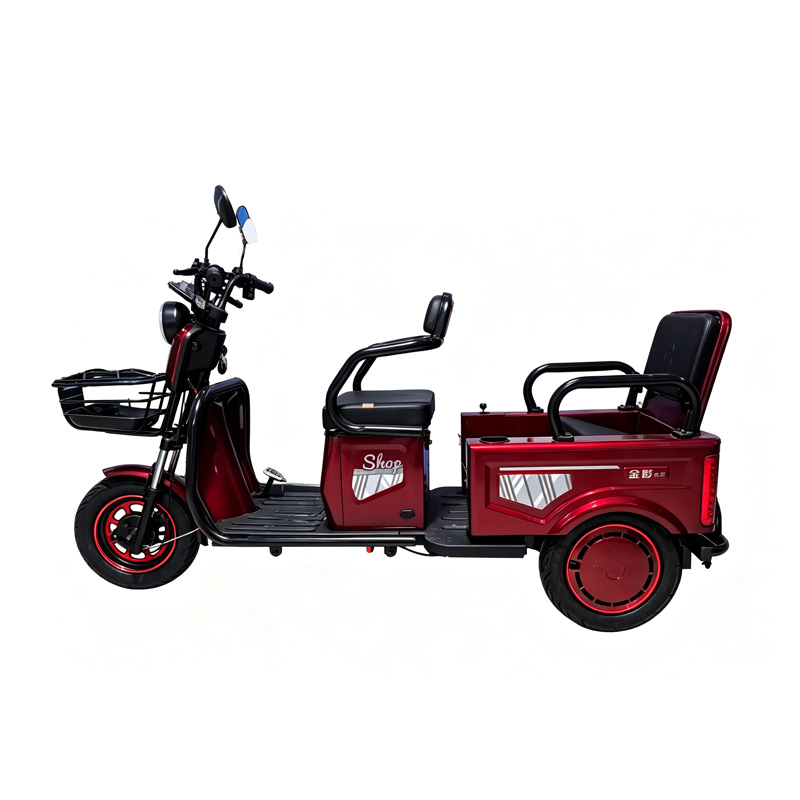
For delivery electric scooter, use a configuration-specific starting point. The A9 page lists a 600 W motor, two 48 V 30 Ah lithium batteries, front and rear hydraulic disc brakes, hydraulic front suspension, full LED lighting and a rear delivery cargo rack. Each listed pack has 1,440 Wh of nominal energy, and the two pack ratings total 2,880 Wh. The usable total and operating sequence depend on the approved dual-battery system and cannot be inferred from arithmetic alone.
Compare these published details with the selected sample on the A9 delivery electric scooter product page. The published maximum-distance claim should be validated on the intended delivery route. The two batteries must be managed according to the approved system instructions.
Charger Matching for delivery electric scooter: evaluate the charging location and turnaround
Charging plans must fit the premises as well as the vehicle. Record where the charger sits, how cables are routed, who supervises the process and how damaged equipment is removed from service. Follow the manufacturer’s instructions for the approved charging environment. Keep charging equipment away from obstructed exits and avoid improvising extension arrangements or adapters during a demonstration. A convenient charging routine is one operators can follow consistently without working around storage, access or cable problems.
For a fleet of delivery electric scooter, draw the daily arrival and departure pattern. A charger shared by several vehicles can create a queue even when its individual charging time appears acceptable. Ask for the stated charging-time conditions, then observe a normal turnaround using the approved equipment. Do not infer a full charge time by dividing battery amp-hours by charger current alone. The charging process can change near completion, and the supplier’s instructions govern the approved use.
Ownership Cost Model for delivery electric scooter: link the model to the pilot
Use the pilot to replace assumptions with evidence. Record completed tasks, unavailable days, service time and parts used. Distinguish launch issues from recurring operating demand, and retain both rather than deleting inconvenient early costs. Ask whether a different workflow would change the result before deciding the vehicle itself is the only cause of a cost problem.
For delivery electric scooter, present the purchase decision with the cost boundary, data source and remaining uncertainty. Confirm commercial terms directly with the supplier and relevant service providers. A lower purchase price may be attractive, but it should be evaluated alongside supportability and the defined job. The useful output is a model the buyer can update as real operating data arrives, with no invented guarantee of profit or return.
Pilot to Reorder for delivery electric scooter: define the release decision in advance
A pilot for delivery electric scooter should answer whether the proposed configuration can perform the intended job consistently and be supported by the buyer. Write the success criteria before the trial starts. Include task completion, operating reserve, fit, loading, service access and the evidence required from the supplier. A pilot without a release decision can produce many comments while leaving the purchasing team unsure what they mean.
Choose a representative operating period and record the conditions it covers. For delivery electric scooter, one quiet day may not represent a busy delivery shift or a passenger service peak. Keep the pilot quantity and scope distinct from the potential production order. Agree how defects, unapproved changes and unresolved documentation will affect the decision to proceed.
Apply battery sizing to the A9 delivery electric scooter
Apply the battery sizing review to this operating sequence: a delivery rider completes several dispatch rounds while the depot tracks both battery identities. For delivery electric scooter, record daily distance, loaded starts, charging access and reserve energy before the trial. Keep the selected battery, charger, accessories and loading arrangement fixed in the record so an observation can be traced to the configuration that produced it. If an option changes during the trial, mark the change and repeat the checks that it affects.
The physical review should pay particular attention to rear-rack loading, front-basket clearance and access to the two battery positions. The service review should cover both pack references, approved charging sequence, suspension and brake consumables. These are separate questions: enough space to operate does not establish enough access to maintain the vehicle. Ask the evaluator to identify the difficult step, record its conditions and explain what evidence would close the concern. Avoid approving an entire application from one favorable observation.
For this delivery electric scooter application, the decision record should contain a configuration-specific energy log. A reason to hold approval is a distance claim with no rider mass, route or assistance setting. State the unresolved item, the party responsible for answering it and the verification required. Do not infer that the packs are hot-swappable, parallel-connected or interchangeable with another model without explicit supplier confirmation.
Compare delivery electric scooter evidence before acceptance
| Decision point | Evidence to request | Hold the decision when |
|---|---|---|
| Application boundary | delivery routes that need a defined dual-battery operating plan | The quoted configuration does not match the intended job |
| Battery Sizing | a configuration-specific energy log | a distance claim with no rider mass, route or assistance setting |
| Physical fit | rear-rack loading, front-basket clearance and access to the two battery positions | The route or accessory envelope has not been checked |
| Service support | both pack references, approved charging sequence, suspension and brake consumables | The installed version or replacement reference is unclear |
| Release record | Approved specification, findings and a named release decision | A substitution or unresolved finding remains undocumented |
Use the table to compare complete delivery electric scooter proposals on the same basis. Mark each item confirmed, open or requiring another check. Keep commercial assumptions separate from technical evidence. A lower quotation can be evaluated fairly only when the battery, charger, accessories, packing and support scope are understood. Ask for written clarification of an omitted field rather than assigning it a favorable default.
Prepare the delivery electric scooter sample request and release record
The A9’s two listed 48 V 30 Ah batteries require a system-level explanation. Ask how the packs are used, identified, charged and replaced under the approved instructions. Record whether the delivered configuration selects a pack, combines energy through a managed arrangement or uses another documented method. The buyer should obtain that answer from the supplier rather than infer it from the presence of two battery housings. The same discipline applies when requesting replacement chargers or spare packs.
The product page lists a rear delivery rack, while the selected product image also shows a front basket. Confirm which carrying equipment is included in the actual quotation and how its load is treated. For delivery electric scooter, write the route log so the pack identities and any approved changeover remain visible. Do not sum two nominal pack ratings and present the result as measured usable energy or guaranteed distance. A useful pilot establishes that the supplied operating sequence completes the required dispatch work with the agreed reserve.
The battery sizing request for A9 should specify daily distance, loaded starts, charging access and reserve energy. Ask for a configuration-specific energy log, identify the test or review conditions and keep the accepted configuration with the order. Hold the purchasing decision if the proposal relies on a distance claim with no rider mass, route or assistance setting. Record the responsible evaluator and the evidence needed to close that specific gap.
Request a configuration-specific delivery electric scooter proposal
For general terminology, consult the relevant Wikipedia reference. It provides background and does not certify this product or establish permission to operate it in a particular market.
Send your delivery electric scooter application, required quantity, destination, proposed load or seating arrangement and battery sizing questions to Hongtu Future. Use the OEM and ODM customization service to discuss the approved configuration, branding, sample evaluation and support scope before placing an order.
Frequently Asked Questions About delivery electric scooter
What should buyers confirm first about delivery electric scooter battery sizing?
Start with daily distance, loaded starts, charging access and reserve energy. For A9, match those inputs to the published configuration and the intended operating sequence. Keep any missing item open until the supplier or qualified evaluator confirms it.
Which A9 facts are relevant to this delivery electric scooter review?
The A9 page lists a 600 W motor, two 48 V 30 Ah lithium batteries, front and rear hydraulic disc brakes, hydraulic front suspension, full LED lighting and a rear delivery cargo rack. Confirm the ordered option and the actual sample before using those details in a purchasing decision.
What evidence should support a delivery electric scooter sample approval?
Request a configuration-specific energy log. The record should identify the configuration, conditions, observations and acceptance decision. A product photograph or a favorable short demonstration does not answer every operating question.
Can a delivery electric scooter component be substituted after approval?
Ask for the proposed part reference, affected interfaces and compatibility evidence. For A9, review the checks and documents affected by the change and record approval before production. Similar headline specifications do not prove equivalence.
What should be included in a delivery electric scooter quotation request?
Name A9, the battery sizing decision, destination, quantity, selected battery, charger, accessories and support needs. Ask for written exclusions and a configuration-specific proposal rather than assuming a standard commercial term.