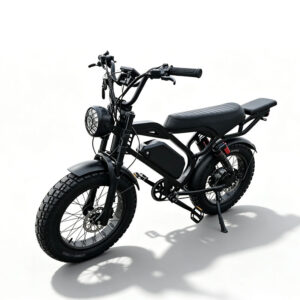
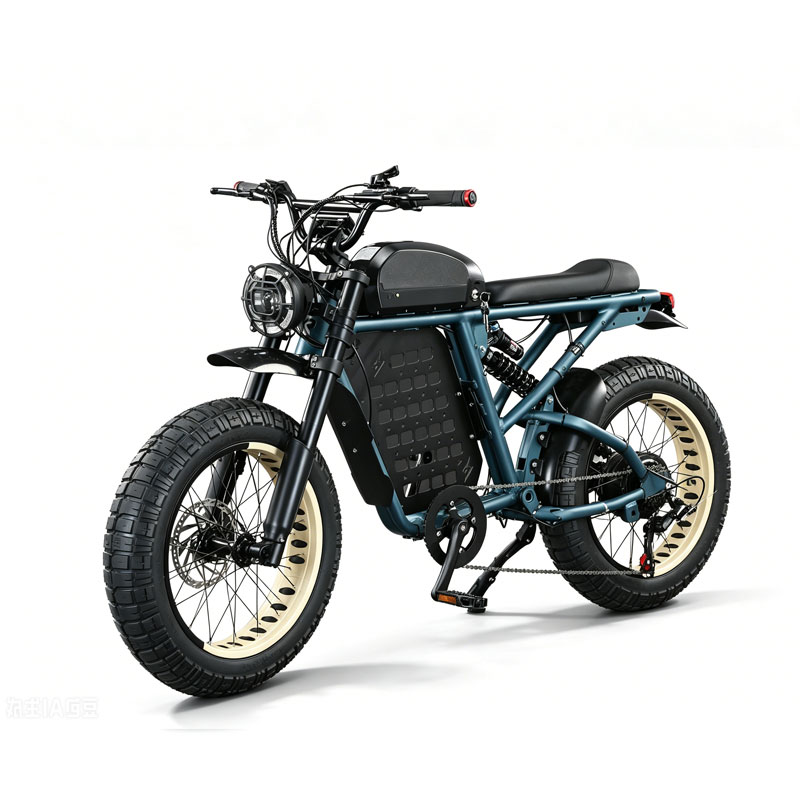
El Bicicleta eléctrica todoterreno con neumáticos gruesos y suspensión única combina un bastidor de aleación de aluminio 6061 reforzado, un motor de cubo de 48V 750W, una batería de 48V 18Ah, componentes de cambio Shimano, neumáticos gruesos 20 × 4.0 y frenos de disco engrosados.
Su característica definitoria es la configuración de suspensión delantera y bastidor trasero rígido. La horquilla delantera engrosada con bloqueo ayuda a gestionar el movimiento que ingresa a través de la rueda delantera, mientras que la sección trasera fija mantiene una estructura de bastidor más simple sin el amortiguador trasero adicional y el varillaje utilizados en un modelo de suspensión total.
Un panel de instrumentos digital proporciona ajuste eléctrico de cinco niveles, mientras que la palanca de cambios Shimano TX30, el desviador trasero TZ5007 y la rueda libre TZ5007 controlan la transmisión mecánica. Un foco de rejilla LED con bocina integrada completa el principal equipo eléctrico y de conducción.
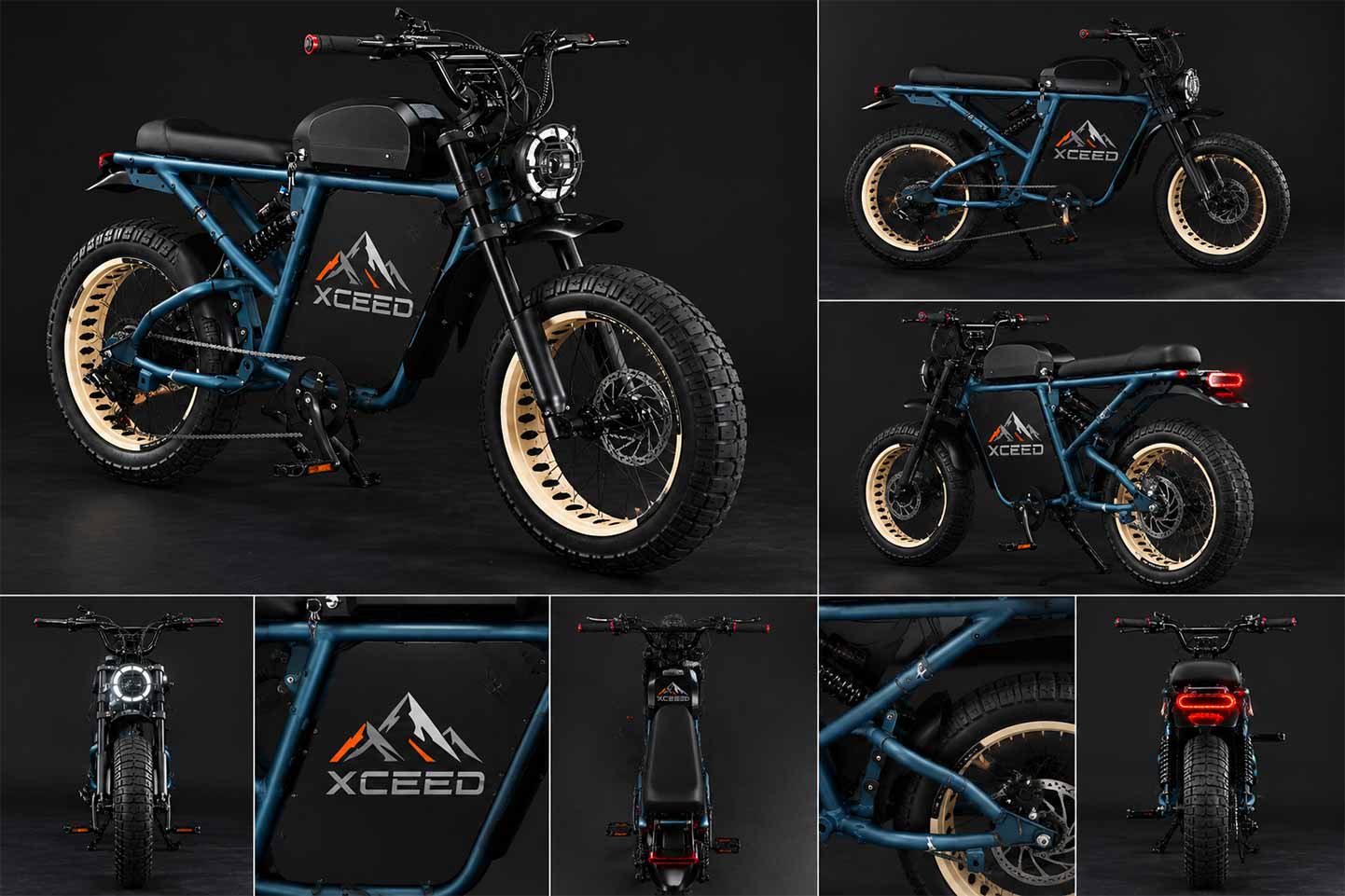
La bicicleta eléctrica todoterreno con neumáticos gruesos de suspensión única está diseñada como una alternativa de suspensión delantera al modelo con suspensión total dentro de la misma gama de bicicletas eléctricas con neumáticos gruesos.
Conserva el equipo principal que se espera de una bicicleta eléctrica con neumáticos gruesos de mayor potencia, que incluye:
La distinción importante es que la suspensión se instala sólo en la parte delantera. La sección trasera utiliza un marco rígido en lugar de un amortiguador trasero separado.
La bicicleta utiliza una horquilla de suspensión engrosada en la parte delantera y una sección estructural fija en la parte trasera.
Cuando la rueda delantera pasa sobre una superficie irregular, la horquilla puede moverse dentro de su estructura de suspensión. Esto ayuda a reducir la transferencia directa del movimiento de la rueda delantera hacia el manillar y el bastidor principal.
Esta configuración confiere a la bicicleta varias características estructurales claramente definidas:
Las versiones de suspensión total y de suspensión única comparten varias características posibles de la categoría de producto, como neumáticos anchos, un motor eléctrico, una batería y componentes de transmisión Shimano. Sin embargo, su bastidor y estructuras de suspensión son diferentes.
| Característica | Modelo de suspensión única | Modelo de suspensión total |
|---|---|---|
| Horquilla de suspensión delantera | Incluido | Incluido |
| Suspensión trasera | No incluido | Incluido |
| Estructura del bastidor trasero | Rígido | Soportado por suspensión |
| Zona principal de absorción de impactos | Rueda delantera | Ruedas delanteras y traseras |
| Construcción de marcos | Triángulo trasero fijo | Sección trasera diseñada para el movimiento |
| Posicionamiento principal | Configuración de suspensión delantera más sencilla | Configuración completa de suspensión delantera y trasera |
El modelo de suspensión única se basa en la horquilla delantera para gestionar el impacto de las ruedas delanteras. El movimiento de la rueda trasera se transfiere a través del bastidor trasero fijo en lugar de mediante un amortiguador trasero.
La versión de suspensión total añade otro punto de suspensión en la parte trasera de la bicicleta. Esa estructura adicional no forma parte de este modelo.
The purpose of a single-suspension design is not to imitate a full-suspension bicycle. It offers a different structural approach for buyers who prefer front shock absorption combined with a rigid rear frame.
Without a rear shock absorber or suspension linkage, the back of the bicycle uses a more direct fixed structure.
The rear wheel, derailleur, freewheel, chain, and frame are arranged around a rigid rear triangle. This makes the suspension difference immediately identifiable in product images and technical specifications.
The lockable front fork helps manage movement where the front tire first meets changing road surfaces.
This is especially relevant around the handlebar and steering area because front-wheel vibration can otherwise be transferred more directly toward the rider’s hands and upper body.
For wholesalers and distributors, the single-suspension model can occupy a separate position from the full-suspension version.
The difference can be communicated through:
The bicycle is equipped with a thickened lockable suspension front fork.
The fork connects the front wheel to the handlebar and main frame. Its suspension movement helps respond to changes entering through the front tire.
The lockable function gives the front end two possible structural settings:
When the fork is not locked, it can move within its designed suspension range and help manage front-wheel vibration.
When the locking function is engaged, the front end adopts a firmer configuration.
No suspension travel, damping adjustment, fork material, or internal spring specification has been provided. These details should not be added until they are confirmed by the manufacturer.
The main frame is manufactured from reinforced 6061 aerospace aluminum alloy.
It supports the principal mechanical and electrical components, including:
The aluminum frame is designed around the compact 20-inch wheel format and wide 4.0-inch tires.
Because the rear section is rigid, the frame does not need to incorporate the additional rear movement structure found on the full-suspension version. This gives the single-suspension model a visibly different frame layout.
The electric drive system uses a 48V 750W high-speed spoke hub motor.
The motor is integrated into the wheel assembly and provides electric assistance through the matched battery and controller system.
The confirmed drive components include:
The Single-Suspension Fat Tire Off-Road E-Bike uses a 48V 18Ah battery.
The battery supplies electricity to the motor, controller, digital dashboard, LED light, and connected electrical functions.
Its voltage matches the 48V motor and controller, creating a coordinated electrical system.
A 48V 12-tube brushless controller regulates power between the battery and motor.
When the rider selects a level through the digital instrument, the controller manages the response of the 750W hub motor.
The operating relationship can be summarized as follows:
The controller is part of the bicycle’s matched 48V power system.
The handlebar area includes a digital instrument panel with five-speed or five-level electric control.
The dashboard gives the rider access to the available electric settings through a central interface.
These five electric levels are separate from the mechanical Shimano gears.
The digital dashboard communicates with the controller to change the selected motor operating level.
The Shimano shifter and rear derailleur change the mechanical gear position of the bicycle drivetrain.
Because the two systems perform different functions, the rider can select an electric level and a mechanical gear independently.
The mechanical transmission uses Shimano components rather than an unspecified generic shifting system.
The supplied drivetrain includes:
These components work together with the bicycle chain and rear wheel to provide mechanical gear adjustment.
The Shimano system remains mechanically separate from the 750W electric drive. The motor provides electric assistance, while the transmission changes the relationship between pedaling and wheel rotation.
The Shimano TX30 trigger shifter is installed within reach of the rider’s hand.
It allows the rear mechanical gear position to be changed from the handlebar area. The trigger-style control operates the rear derailleur through the shifting cable system.
The shifter is matched with the listed Shimano TZ5007 rear derailleur and freewheel.
The Shimano TZ5007 positioning rear derailleur controls chain movement between the available rear sprockets.
It responds when the rider operates the TX30 trigger shifter.
Because the derailleur is mounted around the rigid rear frame, its position is not affected by a separate rear suspension linkage. This is another structural difference between this model and the full-suspension version.
A Shimano TZ5007 freewheel is included in the rear transmission.
The freewheel provides the sprocket positions used for mechanical gear selection. It operates together with the chain, shifter, and rear derailleur.
The bicycle is fitted with 20 × 4.0 tires designed for lithium electric bicycles.
The 20-inch diameter supports a compact wheel and frame layout, while the 4.0-inch width creates the substantial appearance associated with fat tire e-bikes.
The wide tires perform a different function from the front suspension:
The combination of wide tires and a suspension fork gives this model a distinct configuration within the electric fat bike category.
The front tire contacts changing surfaces first, while the suspension fork helps manage movement entering through the front wheel.
At the rear, the wide tire remains connected to a rigid frame. This preserves the defining characteristic of the single-suspension design.
The bicycle uses thickened disc brakes designed for lithium electric bikes.
Disc brakes operate through a rotor-and-caliper arrangement at the wheel. They are matched with the wide tires, 750W motor, aluminum frame, and electric drive system.
The front of the bicycle is equipped with an LED grid spotlight and horn.
The LED light provides forward illumination, while the horn supplies an audible signaling function.
Combining these features in one front-mounted assembly helps organize the handlebar and lighting area. The grid-style headlight also complements the substantial appearance of the 20 × 4.0 tires and reinforced frame.
| Artículo | Especificación |
|---|---|
| Nombre del producto | Bicicleta eléctrica todoterreno con neumáticos gruesos y suspensión única |
| Marco | Reinforced 6061 aerospace aluminum alloy |
| Suspension type | Front suspension with rigid rear frame |
| Front fork | Thickened lockable suspension fork |
| Motor | Motor de cubo de radios de alta velocidad de 48V y 750W |
| Controlador | 48V 12-tube brushless controller |
| Batería | 48V 18Ah |
| Panel de control | Digital instrument with five-level control |
| Shift lever | Shimano TX30 trigger shifter |
| Rear derailleur | Shimano TZ5007 positioning rear derailleur |
| Freewheel | Shimano TZ5007 freewheel |
| Neumático | 20 × 4.0 electric bicycle tire |
| Brake | Thickened disc brake |
| Faro | LED grid spotlight with horn |
The confirmed product configuration includes:
The Single-Suspension Fat Tire Off-Road E-Bike combines a 750W motor, 48V 18Ah battery, reinforced aluminum frame, Shimano drivetrain, wide tires, and practical electronic controls.
Its lockable front fork helps manage movement from the front wheel, while the rigid rear frame clearly separates it from the full-suspension alternative.