Tabla de contenidos
Conclusiones clave:
- Un Solar Tuk Tuk utiliza paneles fotovoltaicos integrados para complementar la batería principal, mientras que un modelo eléctrico estándar depende principalmente de la carga enchufable.
- El rendimiento de la carga solar varía según la salida del panel, la intensidad de la luz solar, las condiciones de estacionamiento, la temperatura, la sombra y el consumo diario de energía.
- Un modelo asistido por energía solar puede ser adecuado para turismo, complejos turísticos, comunidades, proyectos de transporte al aire libre y mercados con abundante sol.
- Un Tuk Tuk eléctrico estándar puede resultar más práctico para flotas de alto kilometraje con carga en depósito predecible.
- La capacidad de la batería, la potencia del motor, la carga de pasajeros, la pendiente de la ruta y las regulaciones locales son más importantes que el panel solar solo.
- Los importadores deberían solicitar datos mensurables sobre el sistema solar en lugar de basarse en afirmaciones amplias sobre la “carga gratuita” o la “autonomía ilimitada”
- La mejor opción debe basarse en el sistema operativo completo del vehículo, no en una sola especificación.
Introducción
El Solar Tuk Tuk está atrayendo la atención de importadores, operadores de transporte de pasajeros, empresas turísticas, administradores de complejos turísticos, distribuidores de vehículos eléctricos y marcas de movilidad de marca privada.
Su característica más reconocible es el panel fotovoltaico instalado en el techo del vehículo. Este panel convierte la luz solar en electricidad que puede complementar la batería principal del vehículo mientras el triciclo está en movimiento o estacionado al aire libre.
Sin embargo, la carga asistida por energía solar no significa que todos los vehículos puedan funcionar completamente sin carga convencional. La energía solar disponible depende del tamaño del panel, la exposición a la luz solar, la eficiencia del sistema, las condiciones de la ruta, la capacidad de la batería, el peso del vehículo y el tiempo de funcionamiento.
Por lo tanto, para los compradores la pregunta importante no es simplemente: “¿Es mejor la energía solar?”
Una pregunta más útil es:
“¿Un Solar Tuk Tuk proporcionará un valor operativo mensurable en mi mercado y aplicación?”
Esta comparación explica en qué se diferencian los tuk tuks eléctricos estándar y asistidos por energía solar, dónde funciona mejor cada tipo y qué deben examinar los compradores antes de realizar un pedido al por mayor o al OEM.
Para obtener una visión más amplia de los motores, las baterías, la autonomía, las estructuras de los vehículos y la evaluación de los proveedores, los compradores también pueden revisar los recursos internos planificados Guía eléctrica de Tuk Tuk 2026.
Solar Tuk Tuk vs Electric Tuk Tuk de un vistazo
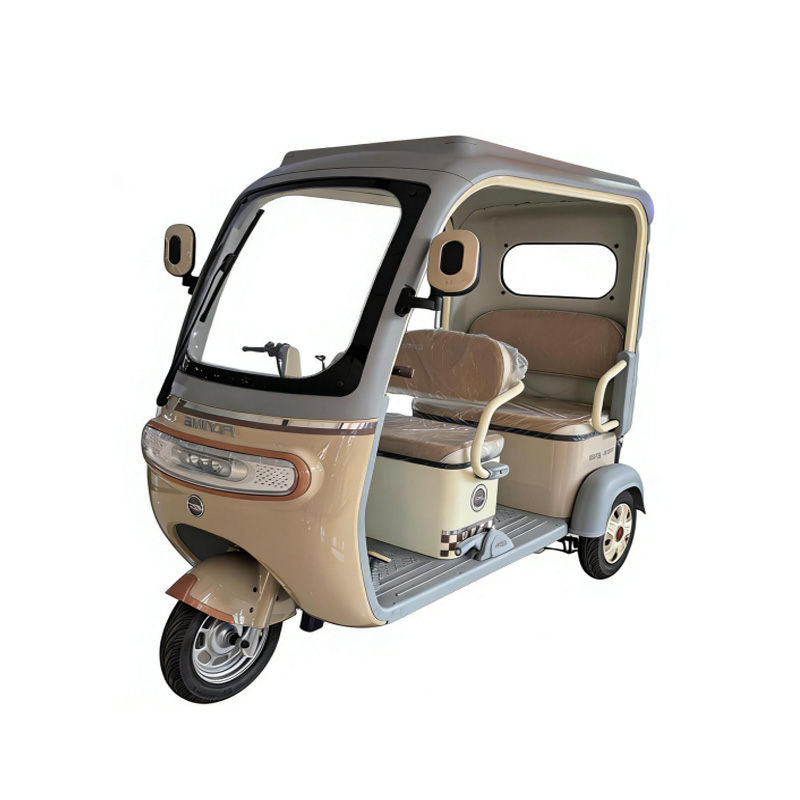
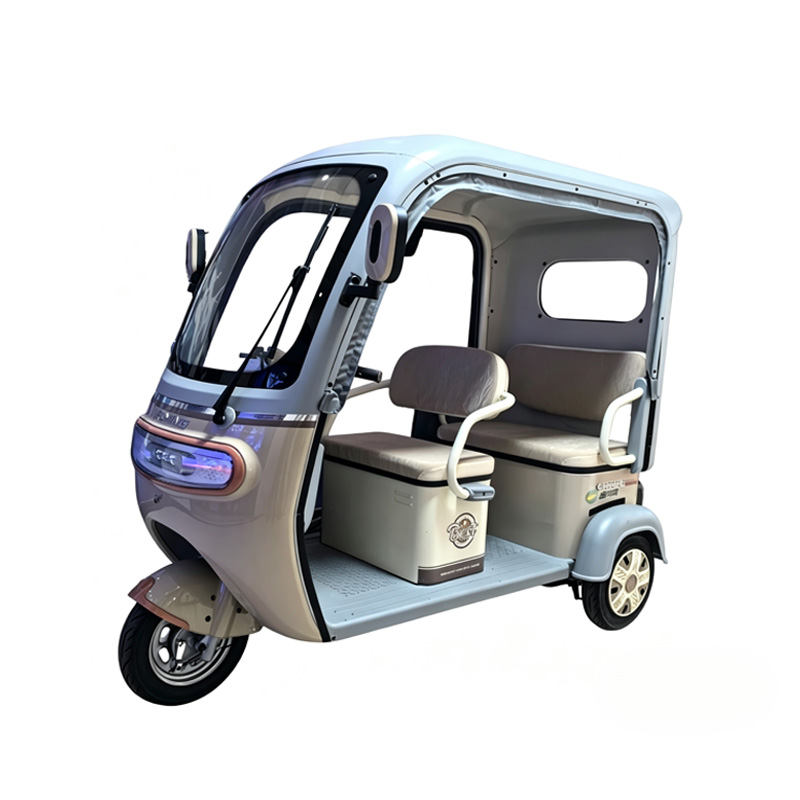
Ambos tipos de vehículos utilizan motor eléctrico, batería, controlador, cargador, sistema de cableado y chasis de tres ruedas. La principal diferencia es que el modelo solar incluye un sistema fotovoltaico a bordo que proporciona una fuente adicional de energía eléctrica.
| Punto de comparación | Solar Tuk Tuk | Tuk Tuk eléctrico estándar |
|---|---|---|
| principal fuente de energía | Batería con carga enchufable | Batería con carga enchufable |
| Fuente de energía adicional | Panel solar a bordo | Generalmente ninguno |
| Dependencia de la luz solar | El beneficio solar varía según las condiciones | Sin dependencia directa |
| Cargar mientras está estacionado al aire libre | Posible bajo la luz solar adecuada | Requiere cargador externo |
| Cargando mientras conduce | Es posible que se produzcan suplementos solares | Normalmente no disponible |
| Techo del vehículo | Soporta panel fotovoltaico | Techo o marquesina convencional |
| Complejidad inicial del sistema | Más alto | Inferior |
| Requisitos de mantenimiento | Incluye inspección de componentes solares | Se centra en el sistema eléctrico convencional |
| Mejor entorno operativo | Aplicaciones soleadas para exteriores | Rutas predecibles con carga confiable |
| Principal preocupación del comprador | Contribución solar real | Capacidad de la batería y horario de carga |
Las similitudes
Ambos sistemas todavía dependen de un motor, controlador, batería, cargador, frenos, suspensión, neumáticos y bastidor correctamente adaptados.
Un vehículo solar mal configurado no superará automáticamente a un modelo eléctrico estándar bien diseñado. La calidad del vehículo, la carga operativa, las condiciones de la ruta y la compatibilidad de los componentes siguen siendo esenciales.
La principal diferencia
Un vehículo eléctrico estándar recibe casi toda su energía almacenada de un cargador externo. Un vehículo asistido por energía solar puede recolectar energía adicional durante condiciones de luz diurna adecuadas.
Por lo tanto, el panel solar debería verse como parte de la estrategia de carga y no como un reemplazo de cualquier otro método de carga.
¿cómo funciona un Tuk Tuk solar?
A Solar Tuk Tuk combines an electric drivetrain with a photovoltaic energy system.
Sunlight reaches the solar cells, which convert part of the available solar energy into direct-current electricity. This electrical input passes through a control system before being delivered to the battery or vehicle electrical system.
The National Laboratory of the Rockies explains that photovoltaic technology can provide auxiliary vehicle power and support battery trickle charging. This is a useful way to understand the role of a roof-mounted solar panel: it can contribute energy, but the amount depends on the available panel area and operating conditions. (nrel.gov)
Panel solar
The solar panel is the most visible part of the system. Its rated output is normally stated under standardized laboratory conditions.
Actual output may be lower because of:
- Cloud cover
- Partial shading
- Dust or dirt
- High panel temperature
- Incorrect panel angle
- Wiring losses
- Controller losses
- Vehicle orientation
- Short daylight hours
- Panel aging
A buyer should never evaluate solar performance by panel appearance alone.
Controlador de carga solar
The solar charge controller regulates the electrical input from the photovoltaic panel.
It helps manage voltage and current before energy reaches the battery. The controller should be compatible with the battery voltage, chemistry, charging requirements, and protection system.
Paquete de baterías
The battery remains the main energy-storage component. It powers the motor when the driver accelerates and supplies electricity to lights, displays, and other accessories.
Solar input can reduce part of the energy that must later come from plug-in charging, but the actual reduction must be calculated from measured energy production.
Motor eléctrico y controlador de accionamiento
The motor converts electrical energy into mechanical movement. The drive controller manages power delivery according to throttle input, vehicle speed, load, and protection settings.
Motor power should be matched to total vehicle weight, passenger capacity, gradient, tire size, intended speed, and expected duty cycle.
¿qué significa realmente la asistencia solar?
Solar-assisted means the panel supports the main battery system by adding some energy under suitable conditions.
It does not automatically mean:
- Unlimited operating range
- Continuous full-speed operation
- No need for a charger
- Full charging in a few hours
- Identical performance in every country
- No battery replacement
- No energy cost
- No maintenance
Importers should ask suppliers to define exactly what “solar-assisted” means for the model being offered.
¿cuánta energía puede generar un Tuk Tuk solar?
The amount of solar energy available depends on several connected variables.
A simplified estimate can be made with the following relationship:
Daily solar energy = panel power × effective sunlight hours × system efficiency
For example, a panel with a stated output of 300 watts does not necessarily produce 300 watts throughout the entire day. Output changes continuously with sunlight intensity, angle, temperature, shading, and weather.
Alimentación del panel
A larger rated panel may generate more energy under the same conditions, but roof size limits the area available on a compact passenger tricycle.
Panel weight, structural support, wind resistance, waterproofing, and vehicle stability must also be considered.
Horas de luz solar efectivas
Effective sunlight hours are not the same as the total number of daylight hours.
A location may receive twelve hours of daylight but only a smaller number of equivalent full-sun hours. Morning light, evening light, cloud cover, and seasonal changes reduce the amount of usable energy.
Eficiencia del sistema
Energy is lost as it passes through the panel, wiring, solar controller, battery, drive controller, and motor.
A professional evaluation should account for these losses instead of multiplying the maximum panel rating by the total daylight period.
Consumo de energía del vehículo
A heavily loaded vehicle climbing hills may consume much more energy than an unloaded vehicle traveling slowly on a flat road.
Solar production must therefore be compared with the vehicle’s actual energy consumption per kilometer. Without this information, a claim about additional range has little practical value.
Gama solar Tuk Tuk frente a la gama eléctrica estándar Tuk Tuk
A Solar Tuk Tuk does not necessarily have a longer base battery range than a standard model.
If both vehicles use the same battery, motor, controller, tires, weight, and route, their initial stored battery energy may be similar. The solar model gains an advantage only when the panel generates enough usable energy during operation or parking.
Gama de baterie bază
Base range refers to the distance available from the charged battery before meaningful solar input is considered.
It is affected by:
- Battery voltage
- Battery amp-hour capacity
- Usable depth of discharge
- Eficiencia del motor
- Controller efficiency
- Passenger load
- Road gradient
- Presión de los neumáticos
- Driving speed
- Frecuencia de parada
- Ambient temperature
Gama solar adicional
Additional solar range is the distance supported by energy produced through the photovoltaic system.
This value should be measured over a stated period and under stated conditions. A supplier should explain panel output, solar exposure, route type, payload, speed, and weather conditions.
Carga estacionada
A vehicle parked outdoors for several hours may collect more solar energy than one operating continuously under shade or between tall buildings.
For resorts, tourist attractions, parks, communities, and outdoor facilities, scheduled parking can become part of the charging strategy.
Pruebas de alcance en el mundo real
Buyers should test the vehicle with:
- Normal passenger load
- Representative road gradients
- Real operating speeds
- Typical stop frequency
- Local weather conditions
- Accessories switched on
- A documented starting battery level
- A documented ending battery level
Testing should compare days with different sunlight conditions. This makes it easier to separate battery performance from solar contribution.
Donde un Tuk Tuk solar tiene más sentido
Solar-assisted vehicles are most valuable when their operating environment allows regular sunlight exposure and when their routes are compatible with moderate energy consumption.
Turismo y Turismo
Tourist sites often operate vehicles outdoors during daylight hours. Routes may be short, speeds may be moderate, and vehicles may spend time waiting for passengers.
These conditions can allow the solar panel to continue producing electricity between trips. The visible solar roof can also support sustainability-focused branding for parks, resorts, ecological destinations, and scenic attractions.
Resorts y Hoteles
Hotels may use passenger tricycles to connect guest rooms, entrances, restaurants, beaches, activity areas, and parking facilities.
A Solar Tuk Tuk can be attractive where vehicles operate slowly and are frequently parked outdoors. Quiet operation may also be valuable in hospitality environments.
Comunidades cerradas
Residential communities can use compact electric passenger vehicles for internal transportation, property services, visitor transfers, and short-distance mobility.
Solar assistance may supplement daytime charging when vehicles are stationed outdoors between trips.
Campus y Parques Industriales
Large private sites may use electric tricycles for internal staff travel, inspection work, security patrols, or visitor transport.
The suitability of a solar model depends on whether the vehicle operates outdoors and whether the routes remain within its load and range capabilities.
Proyectos de Servicio Público
Solar-assisted passenger vehicles can be considered for community mobility, rural transport trials, public parks, and demonstration projects.
The United Nations Environment Programme identifies electric two- and three-wheelers as an important part of transport electrification, particularly in developing and transitional markets. (unep.org)
Ubicaciones soleadas y remotas
A solar panel may provide useful supplementary energy where electricity access is limited or unreliable.
However, buyers should not assume that vehicle-mounted solar power can support every route independently. Grid chargers, off-grid stationary solar systems, battery-swapping arrangements, or backup power may still be required.
Cuando un Tuk Tuk eléctrico estándar puede ser mejor
A solar system adds value only when it provides enough usable energy to justify its additional cost, weight, complexity, and maintenance requirements.
Operaciones de flotas de alto kilometraje
A commercial fleet operating continuously throughout the day may consume energy faster than a roof-mounted panel can replace it.
In this situation, larger batteries, scheduled depot charging, fast turnaround procedures, or battery swapping may have a greater operational effect.
Transporte nocturno
Vehicles used mainly in the evening or at night receive limited direct solar input during their active period.
A standard vehicle with reliable overnight charging may therefore provide a simpler solution.
Instalaciones interiores
Vehicles operating inside warehouses, enclosed markets, factories, exhibition centers, or covered transport areas receive little useful sunlight.
Installing a photovoltaic roof in these conditions may add complexity without producing meaningful energy.
Regiones con sol limitado
Frequent rain, long cloudy seasons, short winter days, and persistent shade can reduce solar energy production.
The buyer should compare annual sunlight conditions rather than evaluating performance during the sunniest month.
Flotas con carga confiable en depósito
A fleet that returns to the same depot after every shift can use controlled charging schedules.
Centralized charging also simplifies energy measurement, battery inspection, maintenance, and driver management. In such cases, a standard Electric Tuk Tuk may be easier to manage.
Opciones de batería solar Tuk Tuk
The battery determines how much energy can be stored, while the solar panel determines how much additional energy may be collected.
These two components must be evaluated together.
Batería de plomo-ácido
Lead-acid batteries are widely available in many markets and may suit projects that prioritize familiar maintenance and replacement supply.
Their higher weight can affect vehicle efficiency and solar contribution. A heavy battery system requires more energy to move, especially on routes with repeated acceleration.
Batería de litio
Lithium batteries generally offer higher energy density and lower weight.
They require a compatible charger, battery management system, appropriate enclosure, correct storage procedures, and verified transport documentation.
Voltaje de la batería
Voltage must match the motor, controller, charger, solar controller, dashboard, and auxiliary electrical system.
A higher voltage does not automatically produce a longer range. Buyers must also compare amp-hour capacity and usable battery energy.
Comparación de energía de la batería
| Configuración de la batería | Nominal Energy | General Interpretation |
| 60V 20Ah | 1,200 Wh | Suitable for moderate routes when correctly configured |
| 60V 32Ah | 1,920 Wh | Provides greater nominal stored energy |
| 72V 20Ah | 1,440 Wh | Higher voltage but less nominal energy than 60V 32Ah |
| 72V 32Ah | 2,304 Wh | Higher nominal energy with greater system demand |
These figures represent nominal energy only. Actual usable energy depends on battery chemistry, discharge limits, temperature, cell condition, controller settings, and system losses.
Potencia del motor y rendimiento del vehículo
Motor selection should begin with the route and operating load.
A model carrying passengers on flat community roads may require a different system from one operating on steep tourist routes.
Potencia nominal del motor
Rated motor power represents the output the system is designed to sustain under specified conditions.
Buyers should distinguish rated power from short-duration peak power. A supplier quoting only peak power may create unrealistic expectations about hill climbing and continuous loaded operation.
Capacidad para escalar colinas
Hill performance depends on more than motor wattage.
Important variables include:
- Motor torque
- Controller current
- Battery voltage under load
- Peso del vehículo
- Passenger weight
- Wheel diameter
- Road gradient
- Climb duration
- Motor cooling
- Starting speed
A loaded hill test is more valuable than a motor-power claim.
Velocidad y consumo de energía
Higher speed increases energy consumption and aerodynamic resistance.
For tourism, resorts, communities, and private sites, moderate speed may provide a better balance between safety, comfort, range, and solar contribution.
Ejemplo de producto Solar Tuk Tuk
Hongtu Future currently offers the Solar Tuk Tuk ñame X1 within its passenger tricycle range.
This model uses a 650W sine-wave motor, a 60V electrical system, 20Ah or 32Ah battery options, a solar-assisted charging function, an intelligent dashboard, automotive-style front lighting, and 300-10 tubeless tires. These specifications belong to this particular model and should not be treated as universal Solar Tuk Tuk specifications.
Carga asistida por energía solar
The model is designed to collect solar energy while moving or parked outdoors.
Buyers should discuss expected solar contribution according to their destination market, average sunlight, route, passenger load, and operating schedule.
Diseño orientado a pasajeros
The enclosed front structure, roof, windshield, rear seating area, lighting, and compact dimensions are designed for short-distance passenger mobility.
Possible applications include communities, tourism areas, resorts, commercial sites, and local transport projects, subject to local regulations.
Configuración de la batería
The available 60V 20Ah and 60V 32Ah options allow buyers to compare different nominal energy capacities.
The higher-capacity option can store more energy, but the correct choice should still be based on daily distance, payload, gradient, charging time, and reserve requirements.
Opciones de color y marca
Two-tone body colors can help tourism operators, distributors, and private-label brands create a recognizable visual identity.
Color selection should be documented during sample approval to ensure consistency across mass-produced vehicles.
Buyers can also compare the wider Passenger Tricycle product range, which includes electric passenger tricycles, leisure models, mobility vehicles, standard electric tuk tuks, and solar-assisted configurations.
Solar Tuk Tuk vs Electric Tuk Tuk para compradores comerciales
A commercial comparison should focus on total business value rather than one feature.
| Business Consideration | Solar Model May Be Better When | Standard Model May Be Better When |
| Operating environment | Vehicle receives regular sunlight | Vehicle operates indoors or at night |
| Daily mileage | Routes are short or moderate | Routes are long and continuous |
| Charging access | Electricity is limited or inconsistent | Reliable depot charging is available |
| Marketing value | Sustainability positioning matters | Functional simplicity matters more |
| Fleet management | Vehicles have outdoor waiting time | Vehicles follow fixed charging shifts |
| Climate | Strong, consistent sunshine | Frequent cloud, rain, or shade |
| Mantenimiento | Solar-system inspection is available | Simpler electrical maintenance is preferred |
| Aplicación | Tourism, resorts, communities | Taxi fleets, logistics, continuous operation |
Costo de compra inicial
A solar-assisted model may include additional components such as the panel, solar controller, mounting structure, wiring, and protective hardware.
The buyer should compare the value of expected energy production with the additional system cost.
Energía operativa
Solar input may reduce the amount of grid electricity required, but the reduction should be measured rather than assumed.
Fleet operators can install energy meters to compare plug-in electricity use between solar-assisted and standard vehicles over similar routes.
Mantenimiento
Solar panels have no conventional moving parts, but the complete system still requires inspection.
Maintenance may include:
- Cleaning the panel
- Inspecting mounting brackets
- Checking seals and waterproofing
- Examining connectors
- Testing controller operation
- Inspecting wiring
- Monitoring battery condition
- Repairing panel damage
Tiempo de inactividad
Vehicle downtime can cost more than routine energy consumption in a commercial fleet.
Spare controllers, chargers, switches, brake components, tires, electrical connectors, and key solar components should be available before vehicles enter service.
Cómo calcular el costo operativo total
The initial vehicle quotation represents only one part of the investment.
A more complete calculation should include:
- Vehicle purchase
- Customization
- Certification
- International transportation
- Import duties
- Local registration
- Charging infrastructure
- Electricity
- Battery replacement
- Neumáticos
- Brake components
- Routine inspection
- Spare parts
- Warranty administration
- Vehicle downtime
- End-of-life battery handling
The World Bank has identified high-use electric two- and three-wheelers as promising entry points for electric mobility, particularly where lower operating costs and last-mile transportation create measurable economic value. (worldbank.org)
Costo por Kilómetro
Fleet buyers can calculate:
Cost per kilometer = total operating costs during the period ÷ total distance traveled
This calculation should be made separately for each vehicle configuration.
Medición de energía
Record how much electricity enters the battery through plug-in charging and estimate or measure how much comes from the solar system.
Without separate measurement, it is difficult to know whether solar charging is creating meaningful savings.
Reemplazo de batería
Battery replacement can be one of the largest lifecycle expenses.
A lower-quality battery may reduce the initial quotation but increase downtime and replacement frequency. Buyers should request cell details, cycle-test conditions, warranty limits, and battery management information.
Cómo evaluar un proveedor de Solar Tuk Tuk
The supplier must understand electric drivetrains, passenger tricycles, photovoltaic integration, battery systems, manufacturing, and export documentation.
Solicite una especificación completa
The specification should include:
- Overall vehicle dimensions
- Peso del vehículo
- Rated payload
- Passenger capacity
- Motor rated power
- Controller rating
- Battery voltage
- Battery capacity
- Battery chemistry
- Charger input and output
- Solar panel rated power
- Solar controller specifications
- Wiring protection
- Brake types
- Tire specifications
- Suspensión
- Iluminación
- Panel de control
- Velocidad
- Test-condition range
- Gradeability test conditions
Solicite datos de rendimiento solar
Useful solar information includes:
- Panel rated output
- Panel dimensions
- Cell type
- Controller type
- Charging voltage
- Maximum charging current
- Measured daily energy production
- Test location
- Weather conditions
- Vehicle position
- Charging duration
- Battery starting and ending state
A claim that the panel “extends range” is incomplete without measurable conditions.
Inspeccionar la calidad de fabricación
Frame welding, roof support, solar-panel mounting, electrical routing, waterproofing, battery installation, brakes, and suspension should be checked before shipment.
Hongtu Future describes its production facility as covering mold development, frame production, assembly, product testing, and quality inspection. Buyers can review the company’s manufacturing background and factory capabilities when comparing supplier resources.
Aprobar una muestra física
A production sample should be tested before a bulk order.
The approved sample should document:
- Motor model
- Battery configuration
- Solar components
- Controlador
- Cargador
- Neumáticos
- Frenos
- Lights
- Panel de control
- Cableado
- Seats
- Body colors
- Labels
- Logo placement
- Accesorios
- Embalaje
Verificar el control de calidad
Vehicle inspections should cover component identity, electrical operation, battery performance, braking, lights, road testing, assembly quality, and packaging.
The internal article How Quality Manufacturing Improves Electric Bike Business Success provides additional information about standardized production, battery testing, motor testing, and final inspection.
Proyectos solares OEM y ODM Tuk Tuk
A Solar Tuk Tuk can be customized for passenger fleets, tourism brands, distributors, resorts, local transport operators, and project procurement.
Marca exterior
Customization may include:
- Logo placement
- Body colors
- Roof graphics
- Tourism branding
- Fleet numbers
- Reflective markings
- Passenger information labels
Branding materials should withstand sunlight, rain, cleaning products, and temperature changes.
Configuración eléctrica
Battery, motor, controller, charger, lighting, dashboard, and solar components may require adjustment for the destination market.
Every change should be checked for electrical compatibility and regulatory impact.
Diseño de pasajeros
Seat materials, passenger capacity, handrails, entry steps, weather protection, storage, and interior lighting may be adapted to the application.
A tourism vehicle may prioritize visibility and appearance, while a community vehicle may prioritize easy access and low-speed control.
Embalaje y Documentación
Export buyers may require custom cartons, wooden frames, protective film, labels, user manuals, maintenance documents, and spare-parts lists.
Hongtu Future OEM and ODM service page outlines support for product configuration, branding, packaging, and market-oriented customization.
The related article La fabricación OEM ayuda a las marcas a generar ventajas competitivas en el mercado a largo plazo can support additional keyword coverage around private-label electric vehicles and customized mobility products.
Requisitos reglamentarios y de seguridad
A Solar Tuk Tuk must comply with the rules of the destination market.
The presence of a solar panel does not change the need to evaluate vehicle classification, registration, road approval, passenger permits, speed restrictions, insurance, and driver licensing.
Clasificación de vehículos
Depending on the country, the vehicle may be classified as:
- Electric tricycle
- Motorcycle
- Auto rickshaw
- Low-speed vehicle
- Neighborhood vehicle
- Passenger transport vehicle
- Commercial taxi
- Private-site vehicle
The classification affects certification, lighting, braking, identification, registration, and operating permissions.
Estructura de techo solar
The panel and mounting frame must withstand vibration, wind, rain, repeated movement, and normal road shocks.
Mounting components should not create sharp edges, interfere with passenger access, or weaken the vehicle roof.
Protección eléctrica
The solar wiring should include appropriate insulation, routing, connectors, fuses, and protection against water, abrasion, heat, and accidental damage.
Cables should not be positioned where passengers, luggage, moving components, or maintenance tools can damage them.
Seguridad de la batería
Buyers should review:
- Battery enclosure
- Fuse protection
- Temperature protection
- Overcharge protection
- Over-discharge protection
- Short-circuit protection
- Charger compatibility
- Connector quality
- Water resistance
- Transport documentation
Aprobación local
Compliance should be confirmed before mass production.
A vehicle that performs correctly in a factory test may still be unsuitable for public-road registration in the destination country.
Errores comunes en la compra de Tuk Tuk solar
Suponiendo que la energía solar reemplace la carga enchufable
A compact roof limits the available panel area.
Solar energy can be useful, but buyers should calculate whether it can support the actual daily energy requirement.
Comparando solo la potencia del panel
Panel wattage does not explain controller efficiency, battery compatibility, shading losses, or real daily energy production.
The complete solar charging system must be evaluated.
Ignorar el peso del vehículo
Panels, mounting frames, batteries, passengers, and accessories add weight.
Additional weight affects acceleration, hill climbing, braking, tire loading, and energy consumption.
Elegir automáticamente la batería más grande
A larger battery can provide more stored energy, but it also adds weight, charging time, and acquisition cost.
Battery capacity should match the route instead of being selected only because it is the largest option.
Uso de reclamos de rango de proveedores sin condiciones de prueba
Range figures are meaningful only when payload, speed, route, temperature, battery, and test method are stated.
A loaded local test is the best way to confirm suitability.
Olvidando repuestos
Solar controllers, connectors, panels, chargers, displays, drive controllers, switches, brakes, and tires should be included in the spare-parts plan.
Commercial vehicles should not remain out of service because a small component is unavailable.
Lista de verificación de adquisiciones de Solar Tuk Tuk
Before approving a sample or order, confirm:
- Destination country
- Vehicle classification
- Intended application
- Passenger capacity
- Maximum payload
- Daily distance
- Longest continuous route
- Road gradient
- Superficie de la carretera
- Operating speed
- Climate
- Average sunlight conditions
- Outdoor parking time
- Motor rated power
- Controller current
- Battery voltage
- Battery amp-hour capacity
- Battery chemistry
- Solar panel rated power
- Solar controller type
- Measured solar output
- Plug-in charging time
- Charger input voltage
- Brake system
- Tire size
- Suspensión
- Iluminación
- Panel de control
- Waterproofing
- Solar-panel mounting
- Spare-parts package
- Warranty
- Certification
- Battery transport documents
- Embalaje
- OEM branding
- Sample testing
- Pre-shipment inspection
Buyers planning a wider electric mobility portfolio can compare Solar Tuk Tuk models with the complete Hongtu Future electric vehicle range, including passenger tricycles, electric cargo scooters, lifestyle e-bikes, and retro electric scooters.
Conclusión
A Solar Tuk Tuk can offer practical value when it operates outdoors, receives sufficient sunlight, follows moderate routes, and has a professionally integrated photovoltaic system.
Its main advantage is not unlimited solar-powered driving. Its advantage is the ability to supplement battery charging, reduce part of the external charging demand, and provide a recognizable renewable-energy feature.
A standard Electric Tuk Tuk may remain the better option for continuous high-mileage fleets, indoor operation, nighttime routes, cloudy environments, and businesses with dependable depot charging.
The final decision should consider:
- Measured solar energy
- Battery capacity
- Vehicle consumption
- Passenger load
- Route gradient
- Charging availability
- Climate
- Maintenance capability
- Spare-parts supply
- Regulatory approval
- Total operating cost
The growth of solar photovoltaic generation and electric mobility is creating new opportunities for integrated transportation solutions. The International Energy Agency expects solar PV to remain a major source of global electricity-supply growth, while electric vehicle adoption continues to increase electricity demand. (iea.org)
For distributors, tourism operators, resorts, and private-label brands, the best Solar Tuk Tuk is the one supported by verifiable performance data, suitable components, controlled manufacturing, market-specific customization, and dependable after-sales service.
Preguntas frecuentes
¿puede un Solar Tuk Tuk funcionar completamente con energía solar?
It depends on vehicle energy consumption, panel size, sunlight, battery capacity, speed, load, and route conditions. Most compact solar-assisted passenger tricycles should still maintain access to conventional battery charging.
¿un panel solar aumenta el alcance de tuk tuk?
It can add energy to the battery and support additional distance. The actual improvement depends on panel output, sunlight exposure, system efficiency, vehicle consumption, and how long the vehicle remains outdoors.
¿cuánto tiempo se tarda en cargar un Solar Tuk Tuk?
Plug-in charging time depends on battery capacity and charger output. Solar charging time varies more widely because sunlight changes throughout the day and across seasons.
¿es un Solar Tuk Tuk adecuado para países nublados?
It can still generate electricity under diffuse sunlight, but production may be significantly lower. Buyers should examine annual local solar conditions and maintain a reliable plug-in charging plan.
¿es un Solar Tuk Tuk bueno para el turismo?
It can be suitable for sightseeing routes, resorts, parks, ecological destinations, and branded visitor transport. Route length, passenger comfort, hill performance, weather protection, and local operating rules must still be evaluated.
¿qué batería es mejor para un tuk tuk que funciona con energía solar?
The correct battery depends on route, load, charging schedule, climate, replacement supply, and project budget. Lithium batteries offer lower weight and higher energy density, while lead-acid batteries may be easier to replace in some markets.
¿Pueden los paneles solares cargar el vehículo mientras está en movimiento?
Some systems are designed to supply solar energy while the vehicle is moving. The contribution varies continuously according to sunlight, shading, panel orientation, and power demand.
¿cómo debo comparar dos proveedores de Solar Tuk Tuk?
Compare the same battery, motor, controller, panel output, solar controller, payload, brakes, tires, dimensions, accessories, warranty, spare parts, and testing conditions. Do not compare quotations based only on product photos.
¿Qué datos solares debería proporcionar un fabricante?
Request panel power, cell type, controller specification, charging voltage, current, measured daily output, weather conditions, test duration, battery state, route, payload, and expected energy contribution.
¿se puede personalizar un Solar Tuk Tuk?
OEM manufacturers may support logo placement, colors, seats, battery options, motor systems, dashboards, lights, packaging, manuals, and other market-specific features. Any modification should be checked for technical and regulatory compatibility.
¿Es útil la carga solar cuando el vehículo está estacionado?
Yes. Outdoor parking can provide additional charging time when sunlight is available. Parking location, shading, panel direction, weather, and battery state affect the result.
¿cuál es el mayor riesgo al importar un Solar Tuk Tuk?
The largest risk is purchasing from unverified performance claims. Buyers should confirm local compliance, approve a physical sample, conduct loaded route testing, inspect the solar system, and document the exact mass-production configuration.