Índice
Introdução
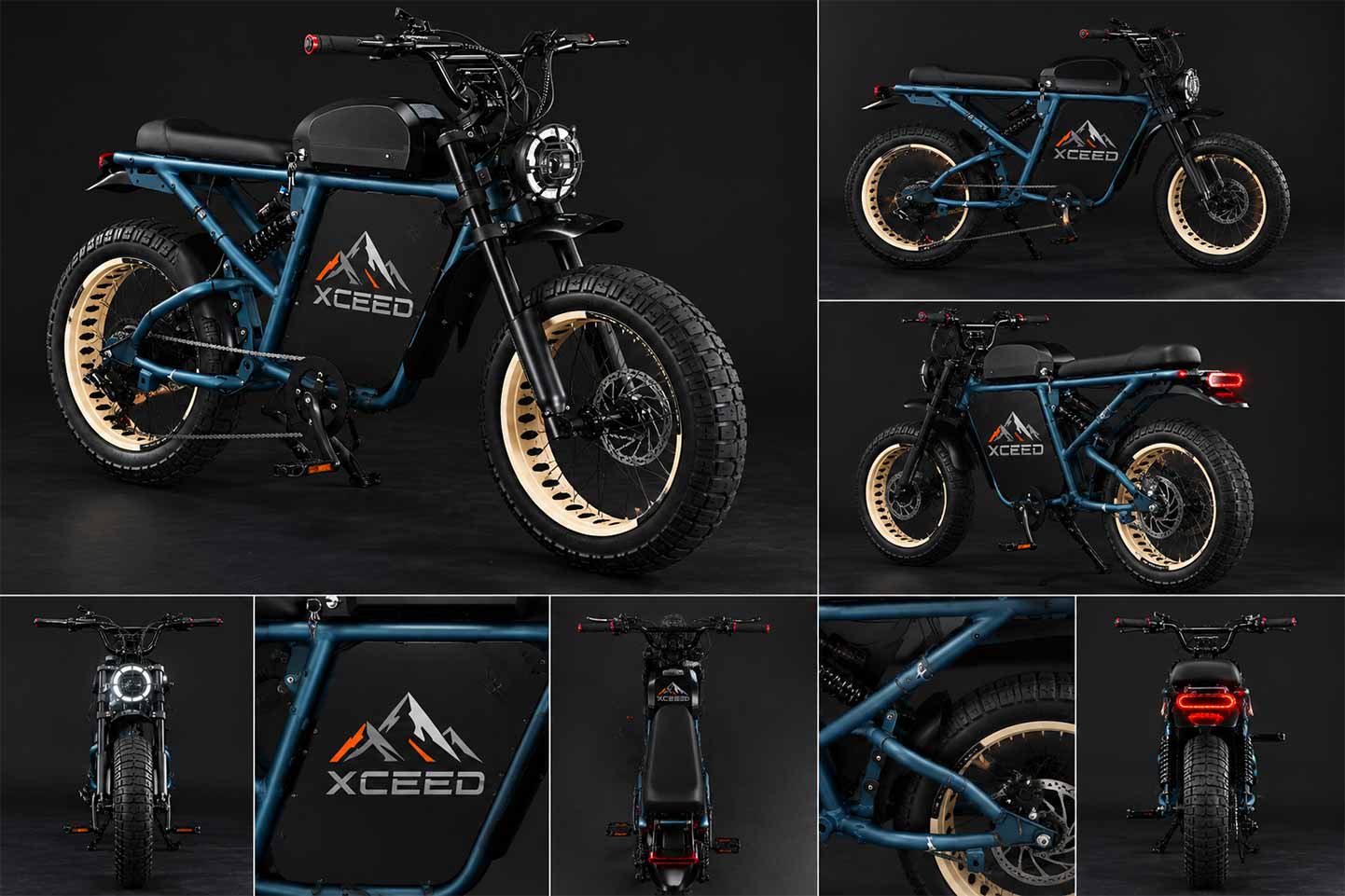
A fat tire e-bike and a regular electric bike may use similar motors, batteries and electronic controls, but tire dimensions can significantly change how the entire bicycle behaves. Wider tires influence traction, cushioning, steering feel, rolling resistance, stability and even the way motor power is translated into movement.
For everyday urban commuting, a conventional-width tire can provide responsive handling and efficient rolling on paved roads. A fat tire e-bike, by contrast, is often selected for mixed surfaces, gravel, uneven roads, recreational riding and applications where riders value additional stability and tire volume.
Neither design is automatically better. The right choice depends on terrain, expected riding distance, rider preferences, vehicle weight, motor configuration and the target market. For distributors and private-label brands, understanding these differences is especially important because tire size affects not only riding characteristics but also frame design, fork clearance, motor requirements and overall product positioning.
This guide compares fat tire electric bikes with regular e-bikes from both a riding and product-selection perspective.
O que é uma bicicleta elétrica com pneu gordo?
A fat tire e-bike is an electric bicycle equipped with substantially wider tires than those found on conventional commuter or road-oriented bicycles. Fat bikes are generally associated with oversized tires originally developed to create lower ground pressure on soft or unstable surfaces.
The broader concept comes from the traditional fatbike, a bicycle category developed around oversized tires capable of operating on surfaces such as snow, sand, mud and other unstable terrain. Electric versions combine this wide-tire platform with a motor, battery, controller and other electrical components.
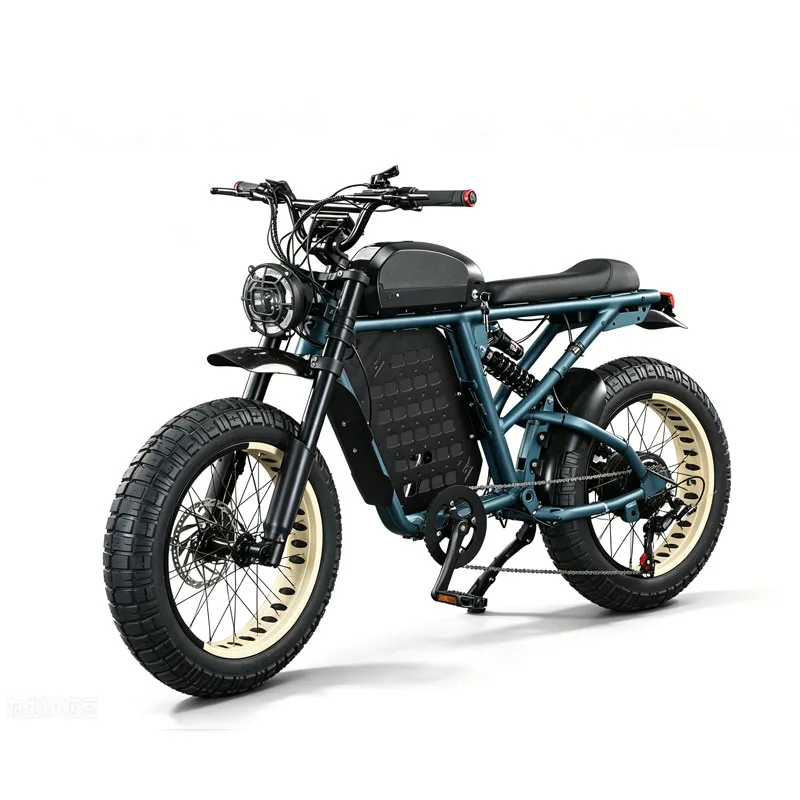
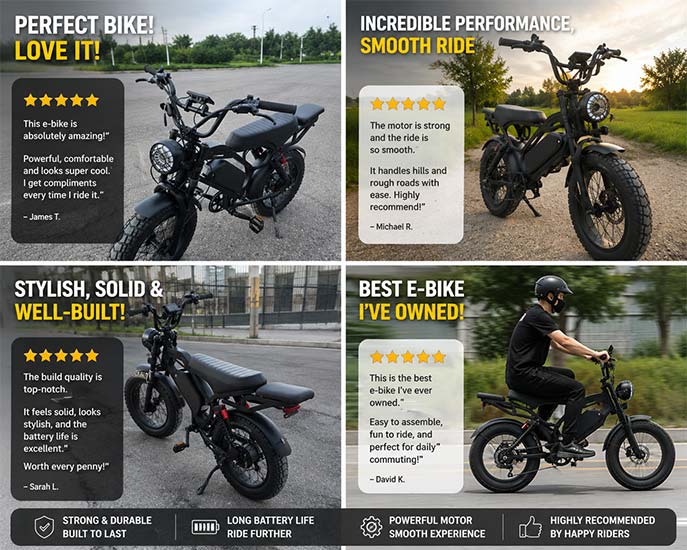
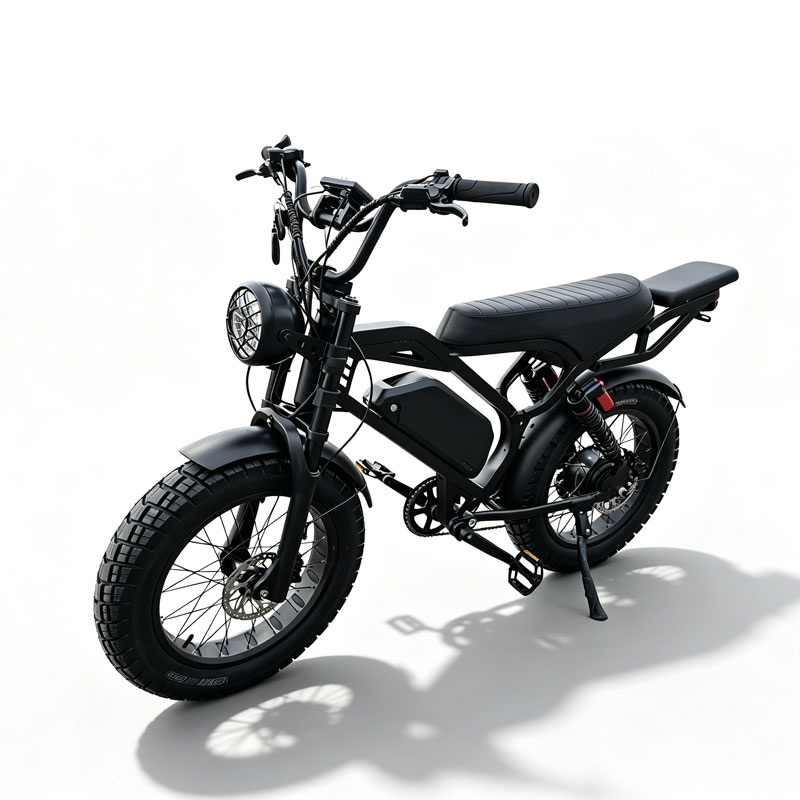
Many modern fat tire electric bikes use tires around 4 inches wide. Hongtu Future’s E-Bike off-road com pneu gordo com suspensão total, for example, uses 20 × 4.0 tires together with a 750W hub motor, 48V 18Ah battery, reinforced aluminum frame and front-and-rear suspension.
A regular e-bike generally uses narrower tires, although actual dimensions vary considerably between commuter, road, hybrid and mountain-style models.
The important difference is therefore not simply appearance. Tire width changes the contact patch, air volume, rolling characteristics and the frame architecture needed to accommodate the wheel.
Visão geral da bicicleta elétrica com pneus gordos versus bicicleta elétrica normal
The comparison below shows the main functional differences buyers should understand before selecting a platform.
| Factor | E-Bike de pneu gordo | Regular E-Bike |
|---|---|---|
| Tire Width | Often around 4 inches | Geralmente mais estreito |
| Surface Contact | Larger | Smaller |
| Rough-Surface Stability | Generally stronger | Depends on tire and bike type |
| Soft-Surface Capability | Better suited | More limited |
| Rolling Resistance | Usually higher | Geralmente mais baixo |
| Tire Weight | Superior | Inferior |
| Cushioning Effect | Greater tire volume | Lower tire volume |
| Steering Feel | More substantial | Often quicker |
| Motor Demand | Can be higher | Frequentemente mais baixo |
| Urban Efficiency | Moderate to good | Often stronger |
| Mixed-Terrain Use | Forte | Model dependent |
| Frame Clearance | Requires wider design | Less clearance required |
These differences explain why tire selection needs to begin with the bike’s intended application rather than appearance alone.
Tração e Contato de Superfície
One of the biggest reasons riders choose a fat tire e-bike is the wider tire contact area.
A larger tire footprint can help the bike maintain contact with loose or irregular surfaces. On gravel, compact dirt, sand or uneven roads, this can create a more stable riding feel than a narrow, high-pressure tire.
This does not mean a fat tire will provide unlimited grip.
Traction is also affected by:
- tread pattern;
- tire compound;
- inflation pressure;
- surface condition;
- peso do cavaleiro;
- braking technique;
- motor output.
A wide tire with an unsuitable tread pattern can still perform poorly on a particular surface.
For B2B buyers, this means that describing a product simply as a “4-inch fat tire e-bike” does not fully explain its intended use. Tire construction and the expected terrain should also be considered.
Conforto em estradas irregulares
Fat tires contain a larger volume of air than narrower bicycle tires. That volume can help the tire deform around smaller road irregularities, providing a degree of cushioning before impacts reach the frame and rider.
This is one reason fat tire electric bikes are frequently used for recreational and mixed-terrain applications.
However, tire cushioning should not be confused with suspension.
A wide tire can absorb smaller surface variations, while a suspension fork or rear shock is designed to manage larger wheel movements.
The most capable rough-surface designs therefore often combine:
Fat tires + front suspension
or:
Fat tires + full suspension
Hongtu Future's E-Bike off-road com pneu gordo de suspensão única uses a lockable front fork with a rigid rear frame, while its full-suspension platform adds rear suspension as a separate product configuration.
This gives distributors a useful way to differentiate products without relying only on motor wattage.
O que é melhor para estradas pavimentadas?
For predominantly paved urban riding, a conventional e-bike often has an efficiency advantage.
Narrower tires generally have less weight and can create lower rolling resistance when riding on smooth surfaces at appropriate inflation pressures. This can contribute to a lighter riding feel and potentially lower energy demand.
A regular e-bike may therefore be particularly suitable for:
- daily commuting;
- bicycle lanes;
- smooth city roads;
- shorter urban trips;
- riders who prioritize nimble handling.
A fat tire e-bike can still work well in urban environments. In fact, many moped-style and lifestyle electric bikes use wide tires because customers value their visual character, stability and comfort.
The important distinction is that the extra tire width is not always necessary when the bike will spend nearly all of its time on smooth pavement.
O que é melhor para estradas de cascalho e irregulares?
The balance begins to shift toward fat tires as road conditions become more variable.
Gravel, broken pavement, rural roads and loose surfaces can expose the limitations of narrow tires more quickly. The greater volume and width of a fat tire may provide a more stable contact area and help the rider feel more confident when road quality changes.
This is one reason fat tire models occupy an important position in Hongtu Future’s Lifestyle E-Bike range, where the product platform can support commuting, leisure and mixed-surface riding applications.
For distributors, this versatility can be useful when the target market includes customers who ride both in cities and on recreational routes.
Pneus Gordos em Areia, Neve e Superfícies Macias
Fat bikes were originally closely associated with riding conditions where conventional narrow tires could sink more easily into soft terrain.
Wider tires can operate with lower ground pressure, which helps distribute load over a larger surface area.
This characteristic explains their historical use on snow and sand. The technical concept of bicycle tire design also shows how tire width, construction and pressure influence bicycle performance.
However, e-bike buyers should avoid assuming that every fat tire model is automatically suitable for extreme terrain.
A complete electric bike still depends on:
- motor torque;
- controller output;
- battery capability;
- tire tread;
- frame strength;
- suspensão;
- brakes.
The terrain should define the system specification, rather than tire width being used as the only off-road indicator.
Uma E-Bike de Pneu Gordo Precisa de Mais Potência do Motor?
Not necessarily, but wider and heavier tires can increase the energy required to accelerate and maintain movement.
Compared with a lightweight narrow tire, a fat tire generally adds rotating mass and rolling resistance. That becomes more noticeable when the bike is ridden on hills, soft ground or at higher loads.
This is why many performance-oriented fat tire e-bikes use relatively strong motor systems.
A 750W motor, for example, can provide a practical balance for mixed-terrain and recreational applications, although the correct specification still depends on local regulation, bike weight, wheel size and intended rider profile.
For OEM development, buyers should not begin with the statement:
“We need a 1000W motor.”
A better starting point is:
“We need an e-bike for mixed urban and recreational terrain, with this expected rider load and this required riding experience.”
The manufacturer can then match motor, battery, controller, tire and gearing around the actual requirement.
Como a largura do pneu afeta o alcance da bateria
Tire width can influence range indirectly through rolling resistance and total vehicle weight.
A fat tire e-bike may consume more energy than a lighter conventional e-bike under otherwise similar conditions. However, real-world range cannot be predicted from tire width alone.
Range is also influenced by:
- battery watt-hours;
- motor efficiency;
- assistance level;
- peso do cavaleiro;
- riding speed;
- temperature;
- wind;
- road gradient;
- tire pressure;
- acceleration frequency.
For this reason, comparing two electric bikes based only on an advertised range number can be misleading.
A lighter regular e-bike used on smooth urban roads will operate under very different conditions from a fat tire e-bike ridden over gravel and slopes.
When comparing product specifications, ask how the stated range was tested and under what conditions.
A pressão dos pneus é mais importante do que muitos compradores imaginam
Tire pressure strongly affects how any bicycle tire behaves.
On a fat tire electric bike, lower pressure can allow the tire to conform more easily to uneven or loose surfaces. Higher pressure can reduce deformation and rolling resistance on harder surfaces.
The appropriate value depends on:
- tire specification;
- peso do cavaleiro;
- cargo;
- terrain;
- manufacturer recommendations.
Extremely low or high tire pressure can cause handling, tire or rim problems.
For B2B distributors, the manufacturer’s recommended pressure range should therefore be included clearly in manuals and after-sales information.
This is particularly important because end users may assume all 4-inch tires should use the same pressure, which is not necessarily correct.
Diferenças de Manuseio e Direção
Regular e-bikes often feel more agile because their wheels and tires are lighter.
This can be advantageous in:
- tight city spaces;
- frequent direction changes;
- bicycle lanes;
- stop-and-go commuting.
Fat tire e-bikes usually feel more substantial.
Their larger tires add rotational mass and can create a more planted steering sensation. Some riders prefer this stability, especially on rough or loose surfaces.
The best choice therefore depends partly on customer expectations.
A recreational rider may value stability and comfort, while a commuter navigating dense urban streets may prefer quicker handling.
This illustrates why there is no universal “best” tire width.
Requisitos de frenagem
Tire width does not operate independently from braking performance.
Fat tire e-bikes are frequently heavier than conventional electric bicycles because they may combine:
- larger tires;
- heavier wheels;
- larger frames;
- higher-capacity batteries;
- stronger motors;
- suspension systems.
Greater vehicle mass can increase the demands placed on the brakes.
For performance-oriented fat tire models, disc brakes are commonly used because they provide braking through a rotor-and-caliper system rather than through the wheel rim.
Buyers should evaluate:
- brake type;
- rotor specification;
- overall vehicle weight;
- intended riding speed;
- terrain;
- replacement-part availability.
For distributors, maintenance and parts accessibility can be as important as initial braking feel.
E-Bike de pneu gordo vs E-Bike regular para deslocamento
Both designs can work for commuting, but they serve different priorities.
A regular commuter e-bike generally makes more sense when customers prioritize:
- efficient paved-road riding;
- lower overall weight;
- easier storage;
- agile handling.
A fat tire e-bike becomes more attractive when the commute includes:
- poor road surfaces;
- gravel sections;
- uneven suburban roads;
- recreational riding outside working hours;
- a preference for larger moped-style aesthetics.
This creates a useful market distinction.
Rather than positioning a fat tire product as “better than a commuter bike,” brands can present it as a more versatile option for customers whose riding environment extends beyond smooth urban pavement.
E-Bike de pneu gordo vs E-Bike regular para passeios recreativos
For recreational use, fat tire models often have a clear advantage in versatility.
A rider may begin on pavement, move onto gravel and then continue along an uneven leisure route without changing bikes.
The extra tire volume, broader contact area and compatibility with suspension systems make this type of platform suitable for riders who value comfort and mixed-terrain capability.
However, riders who spend most of their time on well-maintained bicycle routes may not need the additional weight or width.
The product should match actual use rather than simply following a design trend.
Como o design da moldura muda com os pneus gordurosos
One technical difference often overlooked by buyers is frame clearance.
A 4-inch tire requires substantially more space around the fork, seat stays and chain stays than a conventional bicycle tire.
This affects:
- fork width;
- rear frame geometry;
- wheel spacing;
- chain line;
- motor installation;
- brake positioning.
In other words, a fat tire electric bike should be engineered as a fat tire platform from the beginning.
Simply fitting wider tires to a conventional frame is generally not a proper product-development approach.
For OEM or private-label projects, tire dimensions should therefore be defined early in the design process because they influence multiple downstream components.
Peso e Portabilidade
Fat tire e-bikes are generally heavier than comparable conventional bicycles.
The difference comes not only from the tires but also from wider rims, larger frames, suspension systems and, in many cases, more substantial electrical components.
Weight matters if customers need to:
- carry the bike upstairs;
- load it into a vehicle;
- use public transportation;
- store it in a small apartment.
For users who rarely lift the bike and prioritize riding stability, additional weight may be less important.
This is a good example of why marketing should focus on use case rather than simply listing specifications.
Diferenças Manutenção
The basic maintenance requirements of both types remain similar.
Riders need to monitor:
- tire pressure;
- tread condition;
- brakes;
- drivetrain;
- electrical connectors;
- battery condition;
- wheel alignment.
Fat tires can require different replacement tires and tubes from conventional bikes, so availability should be considered when developing products for export markets.
For distributors, standardizing key consumable components across several models can simplify spare-parts management.
This is especially valuable when developing a product family rather than a single electric bike.
Como os compradores B2 B devem escolher entre eles
For distributors and private-label brands, the correct decision starts with market demand.
Consider five questions.
1. onde os clientes irão andar?
If riders mainly use smooth urban roads, a regular e-bike may provide the more efficient solution.
If roads are mixed, uneven or recreational, a fat tire platform becomes more attractive.
2. que experiência de pilotagem os clientes esperam?
Some customers prioritize agile handling.
Others value stability, comfort and a larger visual presence.
3. qual sistema motor se encaixa no produto?
Tire width should be considered alongside motor output, controller and battery capacity.
4. What product image is required?
Fat tire bikes often create a stronger recreational, adventure or moped-inspired appearance.
Regular e-bikes can communicate a lighter commuter or traditional bicycle identity.
5. How important is serviceability?
Replacement tires, tubes, brake parts and electrical components need to be practical for the destination market.
Answering these questions is more useful than simply asking which tire is “better.”
Comparison by Application
| Aplicação | E-Bike de pneu gordo | Regular E-Bike |
|---|---|---|
| Deslocamento Urbano | Good | Excellent |
| Smooth Bicycle Paths | Good | Excellent |
| Gravel Roads | Excellent | Moderate to Good |
| Uneven Rural Roads | Excellent | Moderado |
| Recreational Riding | Excellent | Good |
| Mixed Terrain | Excellent | Good |
| Soft Surfaces | Stronger | Limited |
| Easy Carrying | Inferior | Stronger |
| Agile City Handling | Good | Stronger |
| Moped-Style Design | Excellent | Less Common |
This table should be viewed as a general selection framework rather than a universal rule. Individual tire designs and bike configurations can produce different results.
Why Suspension Changes the Comparison
Tires and suspension work together.
A regular electric bike with a good suspension fork may provide more comfort than a rigid fat tire bike in certain conditions.
Likewise, a full-suspension fat tire electric bike may provide substantially different rough-surface behavior from a front-suspension model.
This is why product comparisons need to account for complete specifications rather than tire width in isolation.
For brands developing a fat tire model, suspension configuration is one of the clearest ways to establish different product tiers.
A front-suspension model can provide a simpler, more straightforward platform, while a full-suspension model offers an additional performance and comfort differentiator.
Common Mistakes When Comparing Tire Types
One common mistake is assuming that wider tires are automatically better.
They provide useful advantages on particular surfaces but can also increase weight and rolling resistance.
Another mistake is focusing only on tire appearance. Two e-bikes with similar 4-inch tires can behave very differently if their motor, battery, frame, brakes and suspension are different.
Buyers also sometimes overlook replacement availability. A distinctive tire size may look attractive on a product sheet but create challenges if customers cannot easily obtain compatible replacement parts.
Finally, tire pressure is often ignored. A fat tire running at an unsuitable pressure may not deliver the comfort or traction customers expect.
Perguntas frequentes
Is a fat tire e-bike better than a regular e-bike?
Not in every situation. Fat tire e-bikes generally provide stronger stability and versatility on gravel, uneven roads and softer surfaces, while regular e-bikes can provide lower weight, efficient rolling and agile handling on paved roads.
Are fat tire e-bikes harder to pedal?
They can require more effort when ridden without electric assistance because the wider and heavier tires may create more rolling resistance. The exact difference depends on tire pressure, tread, vehicle weight and road conditions.
Do fat tires reduce electric bike range?
They can contribute to higher energy consumption because of additional weight and rolling resistance, but tire width is only one factor. Motor efficiency, battery capacity, rider weight, speed, terrain and assistance level also influence range.
Are 4-inch tires good for electric bikes?
A 4-inch tire is commonly used for fat tire electric bikes designed around stability, comfort and mixed-terrain capability. Whether it is suitable depends on the bike’s intended use and complete configuration.
Are fat tire e-bikes suitable for city commuting?
Yes. They can be useful where roads are uneven or riders value stability and comfort. However, a lighter regular e-bike may be more efficient for customers who ride almost exclusively on smooth urban roads.
Do fat tire e-bikes need suspension?
Not necessarily. Fat tires themselves provide some cushioning because of their large air volume. Suspension provides additional control over larger impacts, so front or full suspension can be valuable for rougher riding conditions.
Conclusão
The difference between a fat tire e-bike and a regular e-bike goes far beyond appearance. Tire width affects traction, cushioning, steering, rolling resistance, frame design, motor demand and the types of terrain the bicycle handles most naturally.
A regular electric bike is often the stronger choice for riders focused on lightweight, efficient urban transportation. A fat tire e-bike becomes particularly attractive when customers value mixed-terrain capability, greater tire volume, recreational versatility and a more substantial riding platform.
For distributors and private-label brands, the best approach is to define the target customer and riding environment before specifying tires, motor power or battery capacity. A well-balanced product should combine tires, frame, suspension, brakes and electrical components around one clear application.
Hongtu Future develops electric mobility products for distributors, wholesalers and private-label brands. Buyers can explore the company’s electric bike product range to compare available platforms and identify a configuration that matches their target market.